All The Marketing News That Fits brings together timely marketing news, sharp commentary, case studies, events, awards, and people moves—curated through the cross-generational lens of The Last Analog Marketers.
LATEST NEWS
The Trade Desk’s Agentic AI Plans for H2 2026: A leaked internal deck points to new agentic AI tools for advertising in the second half of 2026. Read the full report at AdWeek.
As Disney and Netflix turn podcasts into screen-ready IP, brands face a new challenge: when a show expands beyond audio, sponsorship, rights, and ownership can get more complicated. Read more at Campaign.
USA Today Co. is reformatting content to win more AI licensing deals: The publisher is testing new content formats designed to make its journalism more useful to AI systems as licensing negotiations grow. Read more at Digiday.
Why this matters for marketers: OpenAI’s move toward enterprise advertising signals how quickly AI platforms are becoming part of the media and marketing landscape. For marketers navigating both traditional and digital channels, it’s another example of the industry’s next shift. Read more at Digiday.
OpenAI Expands Ad Pilot Across European Markets: OpenAI’s move into Europe signals that AI advertising is becoming a global marketing story—not just a U.S. experiment. For marketers tracking where ChatGPT ads may appear next, this is a development worth watching. Read more at MediaPost.
Streaming Service Aggregation: Streaming platforms are packaging rival services together, making it easier for advertisers to reach audiences that are spread across multiple subscriptions. Read more at eMarketer.
LATEST INSIGHTS
The missing metrics in creator marketing: What can creators actually get people to do? This piece examines a key measurement gap in creator marketing: not just who saw the content, but what action it actually influenced. Read more at Campaign.
Gen Z wants to text at the speed of pigeon: A smart look at how younger audiences think about messaging, response time, and digital communication norms. Read more at Morning Brew.
What back-to-school shopping reveals about the AI-driven holiday season: New research from Walmart and Tinuiti shows how AI, retail media, and value-focused consumers are changing how people discover, compare, and buy. Read more at The Current.
What changes in marketing, and what still drives results? Ipsos and Effie UK outline updated effectiveness principles for today’s landscape while reinforcing the fundamentals that continue to matter. Read more at Marketing Week.
The AI Effect, Part 3: The AI search war is reshaping the web: A look at how AI-powered search is changing the open web and what that shift could mean for marketers. Read more at The Current.
Programmatic Gets An Agentic Brain: An AdExchanger Talks episode on how agentic AI is starting to influence programmatic advertising decisions—and what that shift could mean for marketers. Read more at AdExchanger.
Microdrama advertising is growing fast as app downloads climb: New reporting points to rising ad investment in microdrama apps as the format gains traction. Read the full report at Marketing Dive.
How to build an AI content system that works: A practical look at building AI workflows with the right context, specialized roles, and human review. Read more at MarTech.
3 ways marketing automation platforms are evolving: This piece looks at how automation is moving beyond lead progression to focus on fuller customer context and smarter engagement. Read more at MarTech.
Digital Out-of-Home Growth: By 2026, digital formats are expected to account for 49% of out-of-home ad revenue, signaling how quickly traditional channels are evolving. Read more at eMarketer.
Why Shopping Still Feels Disconnected: Even with more customer data than ever, many brands still struggle to create a smooth experience across online and in-store channels. Read more at eMarketer.
Commerce Media Strategy: Commerce media is moving from emerging channel to established budget line, with spending projected to hit $83.71 billion and account for 20.5% of digital ad spend. Read more at eMarketer.
OPINIONS
What makes a brand apology actually matter? This Adweek piece examines four recent examples from Neutrogena, Target, Good Good Golf, and Callaway—and what marketers can learn from each response. Read the full article at AdWeek.
Navigating event season without wasting time or budget: This Campaign roundup looks at how agencies decide which conferences are worth attending when the calendar is full. Read more at Campaign.
What marketers still get wrong about gaming in APAC: EA Advertising’s push into the space is renewing interest, but outdated assumptions about who gamers are still hold back ad investment. Read more at The Current.
AI is making bad marketing data harder to ignore: As more teams build AI into their marketing workflows, weak data becomes a bigger liability. This piece explains how to spot gaps in your data pipeline and fix them before they affect results. Read more at MarTech.
CASE STUDIES
Fantasy Football at 35,000 Feet: How ESPN and United Turned a Midair Stunt Into a Marketing Story: This ESPN and United Airlines activation shows how live experiences can create buzz for a new season and extend a campaign beyond the moment itself. Read more at AdWeek.
What the World Cup taught brands about sponsorship impact: This piece examines how Coca-Cola and others turned global attention into stronger brand visibility during the tournament. Read more at The Current.
AI in practice: how Octopus Energy is improving customer experience. Octopus Energy says its AI assistant now handles about 4% of incoming customer emails, offering a useful example of how brands are applying AI to service at scale. Read more at Marketing Week.
Lenovo’s World Cup Strategy: Instead of treating sponsorship as brand exposure alone, Lenovo turned the FIFA World Cup into a live proof point for enterprise buyers—supporting tournament operations with more than 25,000 devices and AI-powered infrastructure while maintaining 99.99% uptime. Read more at eMarketer.
EVENTS & AWARDS
Campaign opens nominations for the 2026 CMO 50: The sixth annual list is now accepting nominations, recognizing marketing leaders behind notable work and measurable impact. Read more at Campaign.
The Drum Awards for Marketing Americas 2026 nominations are now open—a timely signal of where the industry is headed. Read the announcement at The Drum.
PEOPLE & TALENT
The Trade Desk’s top engineering executive is leaving after 12+ years—a notable leadership change at one of ad tech’s biggest players. Read the full report at AdWeek.
Why this hire matters:Hightouch, a $2.75B AI startup, has brought on Google agency leader Jitendra Kumar—a signal that AI-driven marketing platforms are competing hard for trusted industry relationships and expertise. Read more at AdWeek.
Dentsu CMO Jeremy Miller is leaving the networkafter joining in 2022. Read more at AdWeek.
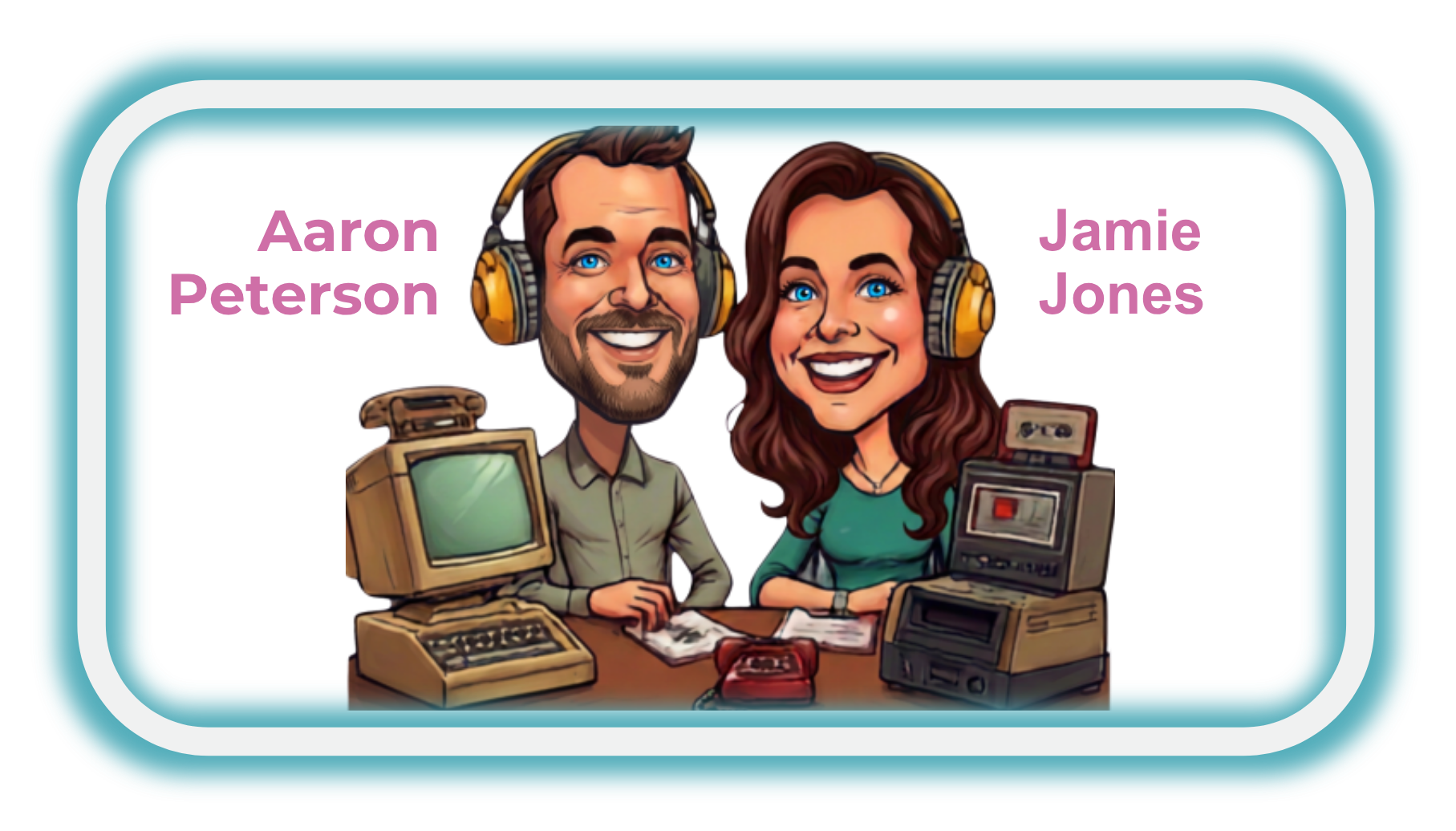
And now, you’re listening to The Last Analog Marketers podcast. For marketers who lived through the transition to digital and the newcomers who inherited the results,. Using the past as a lens to understand the present and navigate the future with intention. With your hosts, Aaron Peterson and Jamie Jones.
Jamie Jones (00:29)
Hi, I’m Jamie Jones and welcome everyone to the latest episode of The Last Analog Marketers. Today we’re discussing the future of the marketing profession. We got our crystal balls out apparently. Marketing has always changed with technology, culture, consumer behavior, but the pace of change today is extraordinary. Artificial intelligence can create content, analyze customers, personalize campaigns, and even predict buying behavior.
At the same time, consumers are becoming more concerned about privacy, authenticity, and trust. Today, Aaron and I want to explore all of what this means for marketing professionals.
Aaron Peterson (01:09)
Yeah, thanks Jamie and thanks for joining us. I’m Aaron Peterson. As marketing experts, we can see and feel that the profession isn’t disappearing, but it’s definitely being transformed. Many people hear about AI and they wonder whether marketing jobs will eventually disappear. What’s your view on that, Jamie?
Jamie Jones (01:28)
I hope they don’t disappear. For my benefit, if nothing else. No, I don’t think they’re gonna disappear. Listen, I’ve been working with AI over the last couple of years. I do think the marketing tasks will change, and I think they’re definitely already becoming more automated. And both of us have jumped in with two feet to use AI where it’s beneficial and makes our jobs easier. Overall, I think the profession will move away from repetitive production and more towards a real focus on strategy, judgment, creativity, customer understanding, and business leadership…which, I don’t know – those are kind of my favorite things.
Aaron Peterson (02:05)
Yeah, I agree. I think AI will replace some marketing activities, but probably not marketing as a profession. For example, AI can already draft email, do social media captions, memorize research, it can analyze campaign performance and it obviously can create different versions of an advertisement. To your point, that really cuts down on versioning. Those tasks are useful, but marketing involves a lot more than just producing those materials, right? You need to decide what a brand should stand for, which customers you’re going to serve, how to position a product, and what kind of relationship a company wants to build with its audience.
Jamie Jones (02:39)
Yeah. So the distinction you think is between tasks and responsibilities?
Aaron Peterson (02:45)
Yeah, I mean that’s exactly right. I think a task might be writing ten headlines. A responsibility might be deciding what the brand should communicate and why people should believe it. And so AI can provide options, but marketing experts still need to be able to judge whether those options are accurate, appropriate, ethical, and aligned with the brand.
Jamie Jones (03:04)
That’s the hard part. Okay, would you say AI is more likely to become a marketing colleague versus a marketing replacement?
Aaron Peterson (03:12)
Yeah, I’d say that’s probably a good way to describe it. I mean, marketers who know how to use AI effectively may outperform those who don’t. The important skill won’t simply be asking AI to create something because anybody can go in and ask a prompt. It’s gonna be knowing exactly what to ask for, then evaluating the result you get back, iterating and improving on it, and then connecting that to, you know, a broader strategy that you might have either in marketing or the overall business.
Jamie Jones (03:38)
Yeah, we’ve all seen the product of a bad prompt and the frustration that comes along with that. Okay, let’s look more specifically at how AI will be used. What are the most important applications?
Aaron Peterson (03:51)
There are several already that have emerged. First it’s content creation. AI can help marketers to produce initial drafts, variations…translations is a big one…images, videos, product descriptions. And all of those things, like you say, they do help to reduce the time that marketers need to spend creating some of those materials when they could be focusing more on strategic thinking.
I think the second one is probably customer segmentation. AI can identify patterns in customer behavior and group people according to interest, needs, or you know, likelihood to purchase. And so it can just analyze data in ways that are quicker and faster than an average human could do even with tools like Excel or Power BI in the past.
Third, I think, is campaign optimization. You know, AI can help determine which message, image, audience, or channel is performing best, but of course you do need to be analyzing those results and making sure that there’s not bias.
And then fourth would be forecasting. We can estimate demand, predict customer churn, identify new opportunities.
And I’d say finally probably customer service and personalization will become more automated and responsive because that’s the thing that takes a lot of time right now is those personalizations, making sure everything is customized while still privacy aware.
Jamie Jones (05:06)
Yeah. It does sound very efficient, but I heard you say analyze, check, look over many times in that response so for sure this system is not doing its work without a human making sure that it all makes sense still. Speaking of, have you heard of the “AI Slop Police” that are now on LinkedIn?
Aaron Peterson (05:26)
I have not, but I’m definitely intrigued by the name.
Jamie Jones (05:29)
I know, right? I think it’s the perfect foil to talk about how too much content and AI slop is maybe getting in the way of how great these tools can be and how we can also be focused on great creative, right?We sort of swung way too far the other way and realized we could put out content so quickly and all of a sudden it’s just like everywhere and people are calling it AI slop. In the face of infinite amounts of content, I think when we see genuine creativity, we’re so excited about it. And it’s infinitely more valuable. When the content is so abundant, I think people are becoming much more selective about what they’ll even read. They’re really ignoring repetitive material. And I think they’re much more paying attention to things that are surprising or emotionally meaningful, useful, or really distinctive. AI can imitate existing styles, but I think a strong creative idea usually comes from understanding people and culture in a deeper way than I think AI can today.
Aaron Peterson (06:34)
I agree. And I think tying this back to something we said, I I guess maybe it was the first episode when I did the One Last Thing and I talked about the creativity of some of the folks around the World Cup, some of the brands around the World Cup who had stadiums like Gillette who covered their logo in foam. I have to assume, and maybe I’m wrong, and if I am, I’ll be pleasantly surprised, but I have to assume that the idea of covering that with foam was not something that came from an AI. Right?
Jamie Jones (07:01)
No, I don’t think there’s any..I just don’t think there’s any way because that’s such a thinking on a different level than I think AI thinks on today.
Aaron Peterson (07:11)
I agree too. So what kind of creative qualities do you think will stand out as we move forward?
Jamie Jones (07:16)
Yeah, similar to what I was covering before. I think original points of view, memorable stories, humor when used kind of appropriately, always a strong visual identity. Emotional honesty just always resonates. I don’t think AI can really necessarily bring emotional honesty. I know that for me, I’ve used that a lot in my own personal branding, and it really resonates on LinkedIn. And last but certainly not least, just a clear understanding of the audience. How many different times have we worked on creating CVPs and understanding who the audience is that we’re trying to reach as marketers? Brands unfortunately or fortunately, should not be creating content simply because they can. And I think that that’s the pitfall they’re falling into with AI because they can just produce content so quickly. And I think they’re forgetting to stop and consider whether the content is actually contributing to something meaningful.
Aaron Peterson (08:17)
I love that. Is it contributing to something meaningful? That’s a good question for a marketer to often ask.
Jamie Jones (08:23)
Yeah, we need that for all for all of life, right?
Aaron Peterson (08:26)
So then does AI ever actually help creativity in some cases?
Jamie Jones (08:32)
I mean, listen, I wasn’t a graphic designer, we might need to get one on a future episode to kind of get their perspective on it. I certainly use Canva and appreciate how much it can help me. But I think it really can help with storyboarding, right? Helping marketers explore ideas quickly, comparing alternatives, obviously overcoming writer’s block. I’ve definitely used it for overcoming writer’s block. Adapting content for different audiences.
Again, this comes down to prompting. Are you giving good prompts? Are you helping it understand what you really need? But I love the idea of the human always being the creative director. So we can use AI again as a colleague, but we need a human to be the creative director to look at the machine generated idea and decide: are we on the right path? Do we need to kind of restart this whole thing? I think there’s a lot of risk in relying too heavily on the systems to just produce without a lot of oversight.
Aaron Peterson (09:34)
I think that’s 100% accurate. Not only because there may be a possibility in the future where some of these tools may not exist or go away, for whatever reason that may be, right? And if that happens and you’ve been relying on it and you and especially if you haven’t developed the fundamental skills that relied upon in your industry because you’ve been relying on these tools for too long, you could be in a really precarious position as a marketer.
And I think the other challenge is that AI systems can reproduce bias, right? They make incorrect assumptions. Or they can sometimes generate content that sounds polished, but it’s actually factually wrong. And they may also produce generic material because they are trained on existing patterns. So to our point of the creativity of the Gillette shaving cream, it’s not gonna think of something in that sort of matter because it’s only gonna think based off of things it knows and it’s been trained on. and I think there’s another risk, right? If every company uses AI in the same way, then marketing also starts to just become repetitive, right? And efficiency is not the same as originality. And so I think it’s important to make that distinction.
Jamie Jones (10:38)
Exactly. The marketers need to really be there to provide the direction and the best results are gonna come from combining the efficiency with the human insight. I’m excited about AI helping scale the work. We’ve certainly both been buried under projects before where now knowing the efficiency that’s available and getting me out of Excel, that would have been really helpful a couple of times along the way.
But I think without the people to supply context and taste, empathy and judgment, we really could be in a position. I love what you said about like it all just starts to look the same, right? Because if we’re all using the same AI, then no human element is kind of creating these very different ideas that go out there. So anyway, let’s move to the next topic: which marketing roles do you think are most likely to change?
Aaron Peterson (11:39)
Oof. Well, unfortunately, I think almost every role will be affected, right? Because copywriters may use AI for research and first drafts, but focus more on brand voice, storytelling, and creative concepts. Social media managers may spend less time scheduling posts and more time managing their communities, which could be great, responding to cultural changes more quickly and in the moment and helping to develop their content strategy in a more effective and efficient way. Marketing analysts will use AI to process those larger amounts of data, as I mentioned earlier, because there’s just so much of it and they can do it so much faster.
But they will still need to be able to explain what that data means and recommend action based off of that data. And we’re gonna get back to that in a bit when we do our One Last Thing. I’ll mention something that’s been on my mind related to that. And I think last, if you think about media buyers and those folks in the industry, they might rely on automated systems for placement and bidding. And then that allows them to focus more on that channel strategy measurement and optimization as they go forward.
Jamie Jones (12:49)
It seems no surprise to anyone that the entry level marketing roles will be or already have been the most impacted. And I think everybody understands that if we eliminate them and that learning curve, that could have dire consequences on the people who do become senior leaders and the more strategic thinkers. I think the repetitive work which can be automated is potentially going to cause problems up the chain. Entry level professionals at this point may not have as many opportunities to learn through simple production tasks, right? We all did that. We all grew up that way. And I think sometimes you need to be able to lean on those experiences. And I fear what it’ll look like when new entry level professionals don’t have those. I think the companies and even the education system are gonna have to rethink what training looks like so that they can utilize the technology, but also understand what the technology is doing, even when they don’t have to do it. Young marketers developing the skills beyond basic execution, learning customer research, analytics, how to create a PowerPoint presentation, all the way up through strategic thinking, the different parts of how a business works together, those are things like we got that on-the-job training. We had to learn it the hard way. I fear if they learn it the easy way or don’t learn it at all because it’s just done for them, what kind of company and what kind of marketing department does that set up?
Aaron Peterson (14:34)
It seems like those early career marketers may need to become strategically useful sooner in their career than they would have in the past.
Jamie Jones (14:45)
Probably, but what kind of redundancy does that create? We don’t need all senior strategists on day one. And so I think figuring out how to put people in the right positions to understand the purpose behind a campaign, interpret results and make thoughtful recommendations, but obviously, split the work like it’s possible marketing teams are just smaller than they used to be. I don’t know.
But, in a practical sense, I do wonder what you think about the skills that someone should develop today if they want to have a career in marketing?
Aaron Peterson (15:25)
A good one. I I think I would recommend probably six areas and these are in no particular order of importance, but first obviously because it’s the topic of conversation on everyone’s lips right now, AI literacy – you need to understand what AI can do, but also where it fails and how to use it responsibly. So it’s not just “go in there and start creating prompts.” There’s a little bit more to it than that.
Second I think it’s data analysis, being comfortable with dashboards, testing, customer behavior and performance metrics metrics. And not just reading them, but understanding what they mean and what the implication is or what the action is that comes out of that.
Third, I’d say customer research because you really need to know how to interview people to identify needs and understand motivations. And that’s true not only when you’re building campaigns and things for whatever you’re advertising or marketing. But it’s also true when you think about the interpersonal skills you need because when you’re working with other teams in your organization, you also need to be able to have those skills where you can communicate with those other people, interview them in a way to understand what it is that they need and how it relates to what you do, so that you can also be successful internally.
Fourth, I’d say, is strategic thinking, which is maybe a bit obvious, but it’s probably the one that’s the hardest to master because it does require a mix of knowledge and experience. So it’s connecting those marketing activities to positioning and business objectives.
Fifth, I would say, is probably creative communication – writing, storytelling, visual thinking, presenting ideas clearly. I think back to sort of the definition of technical writing, which is the idea that you’re basically able to take something that’s complex and distill it down into something that’s understandable. And that applies to basically all marketing concepts.
And then last I’d say is ethical judgment. And I think that’s the one that is probably not talked about as often, but is maybe one of the most important because you do need to understand privacy, to understand fairness, transparency. You need to understand the social impact of marketing, because everything that we do, is tied into the way that the world works. Businesses, brands, media, content, those are all related to and connected to marketing. And so if you don’t really understand what it is that you’re doing and how it’s going to impact the world around you, you’re gonna set yourself up for potential failure.
Jamie Jones (18:02)
And what did they say? That AI has a positive bias? If you say something, it wants to agree with you. So you sometimes need a little bit of a critical voice, which it’s not necessarily designed to give you. But that’s a broad combination of skills. Do you think it’s realistic for one person to master all of those?
Aaron Peterson (18:24)
I mean, no one needs to be an expert in every single one of those areas, though a person could certainly do it if they had the minded focus to do so. So, challenge for some of you out there if you want to take it on. But no, really what marketers need to do is focus on becoming what they call T-shaped, right? And so the idea is that you become deeply skilled in one or two areas where you’ve got a lot of deep knowledge, and then you have working knowledge of several other areas to give you sort of that high-level broad awareness.
So for example, like let’s say you’re a creative specialist, you should probably understand analytics and customer research because that is gonna have an implication to the way in which you think about how you communicate with people in words and visually. And on the other side of the spectrum, if you’re an analyst, you should understand brand strategy and communication because ultimately those things play into why you’re seeing the results that you are, and also you can use the results you have to help improve and inform those the next iteration of that brand strategy or that communication strategy.
Jamie Jones (19:34)
I think that’s so interesting because my most recent experience was with teams and leaders not actually expecting people to be able to have that kind of cross-functional knowledge, sort of this, you stay over here, you know this, you stay over here. And I think that’s truly to the detriment. And we kind of grew up in marketing where there was a lot of cross pollination and you weren’t just creative or you weren’t just an analyst. And I think we’ve gotten away from that. And I don’t think it’s good. I think we need to bring a lot more of that back. But what if you’re talking, in that sense, what personal qualities do you think matter to this?
Aaron Peterson (20:18)
I think if you wanna be a successful marketer, you have to number one be curious, right? And that plays back into that role of that comment above, which is, you know, you should if you’re even no matter what your role is, you should be curious about understanding the things that are adjacent to you and the things that impact your role. And so that’s a big part of where you need to start from.
I think adaptability is number two because everything is constantly changing. That’s the only constant in our industry. So you need to be willing to change your perspective, to pivot your strategy sometimes very quickly.
Empathy is a big one because you do need to really understand not only you know the audiences and what you’re trying to do with your campaigns and your projects, but you do need to understand the people that you’re working with and how you can get the most out of them because ultimately marketers are only successful if they are well connected to the other departments in their business. And if you don’t, if you’re a marketer and you don’t have good relationships with those other departments, you’re probably not going to last very long in that role.
I think good judgment is important because like we said, you need to be able to think both ethically and critically about the things that you’re getting, especially when you are using AI tools and you’re getting responses back from them.
And then I think the biggest, the last one that I think is important is probably a willingness to keep learning. I am constantly reading articles, I’m constantly taking new little trainings or trying tools out or free trials of tools. Because I think that you need to be constantly learning, the tools are constantly changing, the industry’s constantly changing, and so if you have that curiosity mixed with that desire to keep learning, it’s gonna just put you in a position where you’re ready to adapt to whatever comes next. And so I think that that may be more important than knowing one particular platform because if you can have some of these personal skills, you’ll be able to apply them to whichever program or new technology is put in front of you.
Jamie Jones (22:30)
No, I couldn’t agree more. And I was about to say, obviously your interest in continued learning really shows your curiosity. But just the idea that sometimes you’re judged as a marketer on what platforms you know. We’ve seen a lot of platforms. We’ve seen a lot of technology, some pretty analog technology back in the day and some pretty sophisticated stuff now, but it’s the personality of a person who can jump in. And be adaptable, curious, want to learn it, take on the skills, fail fast. I think too often companies look past a person’s ability to adapt through those things versus like, “you don’t know this one specific platform that is just top of my mind today.” You’re just not gonna be good for our team. And I just think they get it really wrong there. But anyway, that’s my view.
Aaron Peterson (23:23)
No, I agree.
Jamie Jones (23:25)
All right, switching gears. We’ve covered the idea of strategy several times already. Obviously, you and I are at a point in our career where strategy is a big part of our day to day. Why do you think strategy is gonna become even more important in the future?
Aaron Peterson (23:40)
Well, because of what we were saying earlier where the production of marketing materials is becoming easier. So if every company can quickly create ads, blog posts, videos, and emails, then the materials themselves become less distinctive. And it becomes more about what it is that you are doing in the thinking behind the materials.
Jamie Jones (24:01)
Can you give us an example?
Aaron Peterson (24:04)
So imagine you have two companies selling similar fitness products, right? Both can use AI to create attractive social media posts, but let’s say company A understands that its best customers are busy parents who want simple, realistic routines. So it builds its brand around convenience and encouragement. Company B instead just produces generic messaging about being healthier and stronger. And the distinction between those two is obviously that the first company has a much clearer strategy. It’s much more direct into what it’s trying to do. So its content is more likely to feel relevant and be successful.
Jamie Jones (24:45)
Yeah, and I think that goes back to what we were talking about earlier, where if you want a message, the technology can give you twenty-five iterations of the message. But if you don’t really get the strategy, then the message is going to be completely wrong to begin with.
Aaron Peterson (25:02)
Exactly. Strategy is what gives the work meaning and direction. And so it’ll be the differentiator between those companies that win and those that don’t, in my opinion.
Jamie Jones (25:13)
Yeah. All right. Another topic we’ve covered a little bit in the last episode when we’re talking about the lead up into the 2020s, privacy. Third party cookies, other tracking methods, they’re becoming less reliable and regulations are becoming much stricter. So what do you think this means for marketers?
Aaron Peterson (25:34)
I think it means that companies are gonna need to build stronger direct relationships with their customers. So instead of depending entirely on external tracking platforms, they need to collect and responsibly use first party data, that information that the customers are providing directly through their purchases, subscriptions, websites and you know, form completions, apps that they’ve signed up for and are giving access to information or just the interactions that they’re having with them directly on like social media platforms or things like that.
Jamie Jones (26:06)
Yeah, I definitely think there’s way too heavy of a reliance on external data and not enough usage of first party data. Why do you think that the privacy changes are making marketing more difficult today?
Aaron Peterson (26:21)
Well, I think it’s making careless marketing more difficult. So in and in that respect, I think it’s actually a good thing, right? Because what it does is it encourages companies to focus on trust and long term relationships rather than just simply collecting as much data as possible, which was definitely a problem. I can remember back in the two thousand tens when I was authoring a report.
For Kantar – and I had put out a quote that ended up getting picked up by The Wall Street Journal and ran in their CMO Today as the “Quote of the Day” – my quote was something like to the to the point of, we marketers today just have too much data and they don’t know what to do with it. And so at that time, especially we didn’t have the AI tools that could figure out how to potentially analyze these amounts of data. People were trying to figure out how to create systems in Power BI or other analytics tools like that that could ingest these huge amounts of data. SPSS being the old school platform that still exists and many companies still use to this day and higher education still largely uses.
And I think that that’s part of what this addresses, right? Because brands that treat their privacy as part of their customer experience are the ones that are gonna likely gain an advantage as they go forward because the customers are gonna understand and see that they respect them. They’re going to resonate with that and they’re gonna stay with them. If you feel disrespected by a brand because it violated your privacy in some way or another, I don’t know about everyone else, but I personally don’t generally feel great about sticking with that brand after something like that happens.
They have to really be able to provide value or show that they’re making some way to make up for that, lack of trust or that breach of privacy. And I think that’s extremely hard to do. So you’re better off being aware of it on the front end.
Jamie Jones (28:28)
It’s interesting in my experience. I find that the marketers understand privacy and want to really stick to the rules, keep it pretty black and white, and often are forced or kind of coerced into doing things or creating programs that seem to kind of skirt the edges of that. Because we need more data, we need more of this, we need to understand and they’re pushed into a position that really isn’t where they want to be.
My perspective is that data and measurement and analytics is kind of…I love it and I hate it. Marketing is often criticized for being so difficult to measure. And I think it’s kind of unfair. And I think we need to find a better system for understanding what marketing needs to be…I used to always call it “the art and the science,” right? That some of this is very analytical and some of it is not really measurable and you just have to kind of know that it’s working or it feels good. But, what do you think the future will change about that?
Aaron Peterson (29:37)
I think to your point just before that, you’re right. Because, going back to that example of the Gillette because I saw in my mind the shaving cream. Is that gonna be measurable? Like that’s an act, an action like that is not easily measurable, right? But we as marketers know that that’s gonna have a big impact on the brand, right?
Jamie Jones (30:02)
We are not sponsored by Gillette, in case you’re wondering.
Aaron Peterson (30:03)
We are not sponsored by Gillette in any way. But no, and I used to live in Boston, so I rode the train past the Gillette factory, saw it every day.
But anyway, no, I think marketing, and we said this when we were talking about the history of marketing and how it was growing, that marketing has and will continue to become more measurable, right? But the measurement part of it also continues to become more complex in addition, like in conjunction with that. And so companies will expect marketing teams to really start to connect their work to business outcomes to things like the revenue, the retention, the customer lifetime value, profitability. And you and I have both already been seeing that in our roles in the last several years, right? There’s been a much bigger push to that. It won’t be enough to say that a campaign received X impressions or likes. And then to some degree that’s already becoming somewhat passe as a real measurement of success.
But marketers are gonna increasingly need to explain what those numbers are contributed to. So those things can still be useful, impressions and engagement, especially for things like brand awareness. But the issue is that they are not always business outcomes. And so a campaign might receive high engagement, but attract people who never really become customers. And that’s where the business side of things can become challenging for marketers who need to prove that what they’re doing is having impact.
So marketers need to select metrics based on the purpose of the campaign. So they need to be clear about what they’re trying to accomplish and then build the expectations around that. Is it awareness, is it consideration, conversion, retention, or loyalty? And each one of those requires different measurements. And so it’s about understanding which of those you should focus on and how you present them back to your business organization to make sure they understand how you’re measuring impact and what that impact actually is.
Jamie Jones (32:05)
I know you’re giving me PTSD about the last couple of years and really trying to be the voice of reason around whether campaigns were successful if we’re literally just looking at clicks or just total emails. Because when you started looking at downstream metrics and people were not converting, were not responding to any additional outreach, sales was not able to have any kind of conversation, a lot of reasoning around not ready to buy, no budget, et cetera, et cetera. If you were more analytical or put in a position where you were kind of doing a lot of the data work, it was really challenging to kind of back your marketing team when also hearing the salespeople say, “You’re sort of sending us the wrong people or people who are not ready.” So I guess my question for you is do you think marketers need to bring a stronger sense of a set of analytical skills?
Aaron Peterson (33:04)
Yes, but not every marketer needs to become a data scientist. You know? It certainly feels like that, especially sometimes when you’re in the moment, right? But it goes back to that earlier statement about building yourself sort of that T approach, right? You don’t need to have a deep understanding of those things, but you do need to have some surface level, right? You should understand basic statistics, you should understand experimentation and doing A/B testing and things like that. Understand the basics of attribution, customer behavior, and ultimately really how to interpret evidence because the valuable skill is really in turning data into an action or a good decision. And so I think that’s where the focus is gonna need to be.
Jamie Jones (33:48)
Yeah, I think that’s a great place to end on and maybe wrap up with a summary of the predictions we talked about today, because we did cover quite a bit. So where do you think the future of marketing’s gonna be in a summary?
Aaron Peterson (34:03)
Yeah. Of course, this is not comprehensive because we know we could go on and include so many other topics on this. We just tried to kind of focus on some things that were really top of mind for us, especially, and that we’ve been seeing talked about a lot in the industry.
I think first, AI is gonna automate more routine marketing work. And we’ve talked about how that’s already begun to happen. We’re already starting to see some of those implications in the industry. And I don’t think that’s going to slow down.
I think second, marketers are gonna spend more time on strategy, on things like customer insight, on the creative direction. And it’s gonna be because they’re enabled to do that, because some of these other routine marketing tasks are gonna be automated, which is gonna free up their time to do the type of thinking that they sometimes are not able to do.
Third, I think privacy and first party relationships are gonna become increasingly important. People are more protective of themselves and their information as the public becomes more aware of what businesses do with their information. As we see companies have data breaches that concern citizens that their data gets exposed. And so I think that marketers who are really respectful of privacy and focus on direct connections with their customers are gonna really win.
Fourth, I think companies will demand clearer connections between the marketing business performance. Like we said, we’ve been seeing that already. It’s gonna continue to be pushed that you have some sort of metrics tied to whatever it is that you’re doing and that you show results to it. I think the big important thing there is for marketers to remember that it’s also partially on us to educate our internal teams so that when we do deliver things like likes and engagement metrics from a social campaign that was focused on brand awareness.
They don’t turn their heads and say, Okay, well, what was the business outcome? Because we’ve educated them to know that wasn’t the goal of this campaign. And so that’s part of it.
Jamie Jones (36:04)
Yeah, I remember talking a lot about is this saliency or is this leads, right? Are we doing this for saliency or are we doing this for leads? Because if it’s just for saliency, it’s okay to talk about likes and engagement and views and et cetera. But if we’re talking about leads, then we really need to be able to quantify it. And I think too often we were coming up with great ideas, but not necessarily defining it with the right goals and metrics in the end.
Aaron Peterson (36:32)
Absolutely. I think that’s one of the big challenges that still exist to this day for a lot of corporations, right? I think probably last would be creativity and authenticity will become more valuable because AI is going to continue to make sort of average content more abundant. Like we said, it can only create things based off of what it’s been trained on. So it’s not necessarily gonna be able to create new ideas. It’s also not necessarily gonna create differentiated ideas.
Now the only distinguishment will be between the people behind it who are prompting it and working with it, right? And so that’s where, like we said earlier, it really comes down to having those underlying base skills and less about being, “I’m super proficient in this specific platform.”
Jamie Jones (37:16)
Yeah, absolutely. I think we already talked a little bit about what it looks like to be a young professional in marketing today, but any specific advice that you would give to someone if they were about to graduate from college?
Aaron Peterson (37:30)
I definitely reiterate that idea of don’t define yourself only by a tool or a platform because the tools are gonna change. You really need to learn how to understand the people, to solve business problems, to communicate clearly, I think is probably the one that gets overlooked the most, but is probably the most critical because like I said, it goes back to how you interact with those other people in your organization and how they respond to you, and if you’re able to communicate your ideas and your work clearly to them.
Analyzing evidence and the ability to just sort of interpret data, I think that’s gonna be a critical thing because it’s one thing to be able to go in and just get data, but what do you do with the data after that?
And then finally I’d say make sure you understand how to use technology responsibly. And that is something that falls on marketers to some degree. There is some regulation that exists, right? Obviously in Europe you’ve got GDPR, there’s protections in California for certain things. And so a lot of it actually falls on us as an industry to sort of self-regulate ourselves and be responsible first. But there’s an intrinsic win to that, which like we said earlier is if you are considerate of privacy, if you are responsible and trustworthy with your customers or your audience, you’re likely going to build long term relationships that help you continue to win. So, there’s a benefit to doing that.
Jamie Jones (39:06)
It’s interesting. Someone asked me recently, “What’s the most important thing in demand gen?” Something along those lines. And I think they wanted, I think the response they were getting from a lot of people were, “this technology or that technology, you need to have that.” And I literally said alignment between sales and marketing. Do we have the same goals? Are we working, driving in the same direction? Because in my experience, as you covered in the beginning of that response, it’s the internal part of it. It’s the politics, the, who’s getting credit for whether this goes right or not. It doesn’t really fail in the technology, it fails in the people. And so AI is not going to fix that. It’s only gonna make it worse if you’re just adding more technology to it. So I think the future of marketing isn’t really just about the machines creating more ads, it’s about using the technology to understand the internal processes better and maybe streamline them, using it to understand the customers better, making quicker, better decisions, or maybe having a more plethora of I of chances to look at different things and then picking from 20 options when you probably would have only come up with three on your own. And then as you said, doing it in a really relevant way that maintains a lot of trust.
Aaron Peterson (40:31)
Yeah, I think that’s exactly right. the strongest marketers are going to combine the speed of AI with human creativity, empathy, strategic thinking, and that ethical judgment, and they’re the ones who are gonna win.
Jamie Jones (40:46)
Yeah, I completely agree. All right, Aaron, why don’t you close us out with our One Last Thing?
Aaron Peterson (40:52)
Absolutely. And it actually ties directly into something we’ve been talking about today, which is one thing that’s been on my mind these past few days is a recent article I read about the next generation of marketers who are entering the workforce. and while they’re tech savvy in terms of being able to use lots of tools and technology, the study found that they lack fundamental understanding of the structure behind the tech, right? And that’s problematic for some of what we were talking about already today.
At the same time though, while they can create wonderful dashboards, they struggle to connect the data to those business objectives, which again we were earlier talking about how that’s such a big important part of being a marketer today. While all of that has been happening, the Content Marketing Institute released a career outlook research report in April that found that one in three marketers say their organization is reducing entry level marketing hiring. Okay. So one in three, 33% are reducing entry-level marketing hiring, right? On top of that, the percentage of companies that are reducing that entry level hiring is two and a half times higher than the percentage that are increasing entry level hiring.
So, what we’re getting right now is literally a net score of -19.8 points on hiring entry level marketing. And the companies that are doing this are largely doing so because many of those entry level tasks can be done or automated with AI and other emerging tools, like we were saying. and so of course, while that may make sense, right, in the short term, because it’s gonna help your budgets and you’re still getting all of those tasks completed.
What it’s obviously ignoring is this huge implication. What happens if and when those of us with the skills and knowledge age out and the next generation is not prepared? Because there’s two parts to this, right? It’s about being prepared properly through education, but also having those real life experiences in your early career. I can remember so many meetings and conversations in the early years of my career that I was frankly not qualified to be a part of, right? I just wasn’t. But at the time, mentors and managers recognized that growth comes from a combination of knowledge and experience. And I would say much of who I am as a marketer is shaped by those early experiences where I learned from the people who had already done, failed, re-tried again and succeeded, right? And so I have a lot of concern for our industry and where it’s headed and, you know, reading something like that and based off of the conversation that we had today.
Jamie Jones (43:38)
Yeah, I’m a little concerned about companies with CMOs who’ve come up through other departments and just sort of ended up with that marketing title because there is no sort of hierarchy within marketing itself. But that could probably be a whole episode that we’ll talk about.
Aaron Peterson (43:53)
I’m sure we’re gonna get into that.
Jamie Jones (43:56)
All right, Aaron. Very interesting stuff. I love the One Last Thing. Definitely something to keep an eye on. This is it for our episode of The Last Analog Marketers. Thank you for joining us.
Aaron Peterson (44:09)
Yes, and be sure to like, share, subscribe, all that jazz. And until next time.
And now, you’re listening to The Last Analog Marketers podcast. For marketers who lived through the transition to digital and the newcomers who inherited the results. Using the past as a lens to understand the present and navigate the future with intention. With your hosts, Aaron Peterson and Jamie Jones.
Aaron Peterson (00:30)
You’re listening to The Last Analog Marketers, and I’m Aaron Peterson.
Jamie Jones (00:35)
And I’m Jamie Jones. This is part two of our deep-dive series. Aaron kicked off part one with the origins of marketing up through the dawn of digital. Today I’m gonna lead you through the rest: marketing’s transformation from the 1990s through the early 2020s. I’ll walk you through the big turning points and the tech that created or accelerated.
Aaron Peterson (00:57)
Yeah, thanks for that setup, Jamie. Like you said, let’s just dive right in. We’ll start with the 90s, truly some of the best years for culture, for creativity and more. Our formidable years for sure. Why don’t you start out by telling us a little bit about how the early web changed marketing when it came in?
Jamie Jones (01:17)
Absolutely. So the 90s are the moment that marketing stopped being about mass broadcast and started flirting with interactivity. A few quick things to sort of set us up. The web made content discoverable 24-7. Shocking, we all know that today, but at the time, super different, not something people were used to. Banner ads started to introduce the idea of paying for eyeballs online, and email opened a direct one-to-one channel.
None of it was pretty at first. Anyone online during AOL CD phase can remember dial-up internet. It was not very pretty. But structurally, it really mattered for what was to come. This is why the new age of marketing really took off. You and I were still coming of age and getting our start, but the seasoned marketers and professionals that I’ve talked to told stories about suddenly having a new channel at their disposal and it was measurable in a way that TV just wasn’t.
The clicks were crude, but they were data. And this was new access to data set expectations. Campaigns could be tracked, iterated, and optimized in real time. I mean, real time is to come, but we thought it was real time. Now, mind you, it’s 1990s and not 2020s, but it was a huge improvement on what they had been previously working with.
Maybe most importantly, digital leveled the playing field. For the first time, small players could reach audiences without huge media buys. The low barrier to entry started shifting power away from purely big budget brands.
Aaron Peterson (02:51)
Yeah, I mean it was definitely disruptive at b as a format, both because of the way that it changed the way that we reached audiences…but I mean, who can forget those early banner ads, right? They were basically digital billboards that screamed for attention, literally flashing on your screen on the sides and tops of web pages.
Jamie Jones (03:10)
My gosh – ugly, loud, but truly revolutionary. And the underlying lesson was there. Measurable interaction beats assumption. And the assumption is a lot of what we talked about in part one. They didn’t always know whether it was making a difference. Now we start to know.
Aaron Peterson (03:27)
Yeah, that makes sense. And so then as the 90s starts to come to an end and we start to focus on the excitement or impending doom, depending on how you look at it, of the new millennium, what’s sort of the next big shift that we see?
Jamie Jones (03:42)
I think it’s all one word, search. Starting in the late 90s and the early 2000s, the rise of search is the second turning point. Google changed intent-based marketing. Before search ads pushed messages outward and hoped for recall, with search, it was different and better. Marketers could now meet people in their moment of need. SEO and Paid Search created a whole new discipline, optimizing for queries, buying keywords, and thinking in user intent.
And basically everything took off pretty quickly from there. With each passing year in the early 2000s, technological improvements brought more change. First, sophisticated indexing and ranking algorithms, then improved platforms with auction-based pricing and quality scores. Suddenly anyone could buy intent at scale and measure conversion behavior end to end. And I really saw this when I worked at 24/7 Media, which was a part of what is now Zaxxis, which became WPP Media.
Where we were selling a lot of long-tail, right? And the entire proposal that we were selling to these brands was, “Hey, you’re gonna reach the same audience, but you’re not gonna pay that CNN.com pricing.” So from there, growth and improvements in technology basically rewired the budget. Brands moved more spend to performance-driven channels because the performance was accountable. Maybe most important of all, search birthed the idea of lifetime value optimization. If you can see acquisition costs and the downstream revenue, then you can plan long term customer economics.
Aaron Peterson (05:15)
Yeah, maybe it’s because of the age that we were at the time, but I feel like thinking on it now, we welcomed search with open arms, but now, maybe AI with a little bit of trepidation. Even though, like I say, in retrospect, it sort of feels like they were equally these tsunami like waves in our industry and in our society.
And so maybe we need to think about that as we are thinking about AI and how we move forward. But looking past searches rise, where or when was it that marketers first started really obsessing over attribution?
Jamie Jones (05:50)
Pretty soon after that, search creates massive opportunities and also a ton of new headaches. The search exposed attribution challenges. Are we talking about last click? Are we talking about multi-touch attribution? You know, the debates started then and honestly, they haven’t stopped. I know that that’s a conversation I was still having in 2026. So I think it forced teams to ask smarter questions about how channels work together. And I still think that. The mixed media model is a challenge and I don’t think we ever have quite a hundred percent figured it out.
Aaron Peterson (06:25)
Yeah, I feel like those years between the mid-90s to the mid-2000s felt pretty revolutionary. And then we’ve got the rise of social media, right? So walk us through that rise and the domination of the social platforms that we’ve now loved and or hated, and of course the ones that we’ve lost along the way.
Jamie Jones (06:46)
Yeah, absolutely. I think in the modern history of marketing, social’s rise is kind of the third turning point and probably the stickiest. Early platforms like Myspace and Friendster evolved into Facebook and Twitter and Instagram. But during that time, two things flipped distribution control and trust dynamics. Brands could now build a following, but the customers became the publishers too. We had user reviews, social posts, influencer content.
Authentic peer voices started to outrank polished brand messaging. So with social, we saw an entirely new facet of technological change to deal with as a marketing team. From social graph algorithms to user profiling and later advanced ad targeting using behavioral signals, the platforms introduced organic attention alongside sophisticated ad products. It was a lot to deal with at the time.
Aaron Peterson (07:41)
It really was.
Jamie Jones (07:43)
And so I think in this most recent phase is where if you worked for a B2B company or you worked for a B2C or a D2C, the brands really start to bifurcate, right? As the need for marketing shifts from one-way broadcasting to a community and relationship building, authenticity and access really become king. However, some of these big brands, some of these B2B brands, they really struggle with that. And not all brands have done it well.
So social media creates a new paradox around really bringing your authentic brand forward. It also creates this new thing that everyone’s talking about, which is privacy. As powerful as search was, and then online targeting and retargeting. We all remember the cookie debate. Really, social media is where privacy really starts to come to the forefront, and ethical and regulatory questions continue to grow and arise with the way social starts to come onto the scene. At the intersection of attention and authenticity, social gave brands a voice to be both public and fragile, but did they do it well? That’s the question.
Aaron Peterson (08:51)
Yeah, it’s funny that you mentioned cookies because I couldn’t help but think that Google saying that they’re going to retire cookies kind of feels a little bit like Lucy and Charlie and the football, right? They keep saying they’re going to do it and everybody’s kind of scrambles and prepares for the moment and then they’re like, “Actually we’re gonna hold off on that.” But anyway, so in that scenario though, so brands lost a little bit of the control, but on the other side of it, they got like unlimited content, right?
Jamie Jones (09:19)
Sometimes they lost a lot of control. I mean, viral moments work and they’re glorious, but we’ve seen a lot of catastrophic failures along the way too.
Aaron Peterson (09:29)
True, absolutely true. Now parallel to the rise of the different marketing technologies and platforms, we also start to see sort of the different advertising mechanisms pop up. Explain to us a bit about how programmatic and Martech became such a big part of the marketing team’s focus and budget as we grew forward past that social movement.
Jamie Jones (09:51)
I mean, do you want my personal story of Martech, because it feels like in the beginning there was no tech and then now it’s all tech all the time. But no, from the late 2000s into the 2010s, we see this massive industrialization of ad buying and marketing operations. Programmatic advertising, automated media buying, and real-time bidding are just words we’re using all the time. And at the same time, the Martech just explodes, right? Everyone has a CRM, everyone has a marketing automation system, everyone has an analytics platform, and everyone has tag managers. That’s literally all I talked about for the last five years, it feels like. So teams went from these siloed campaigns that felt good, and maybe we had a little bit of tracking to data, data, data all the time. And I think we somewhere along the way lost a little bit of the focus on good creative and really started focusing so much of our attention onto attribution and data. I think this is also a period where we see streaming enter as another medium. And so with that, there’s just another opportunity for advertisers to reach audiences in a new and different way, sort of the building of the TV and then the paid for TV HBO that you sort of covered in episode one.
I think streaming becomes like the third part of that. I’m not gonna get super deep into it, but I think we should dive into it into another episode because there’s just so much to talk about in the streaming days. but I did cover, I think, on the last episode about my One Last Thing about how sometimes those streaming platforms don’t have very good ads and you see the same ad over and over again. So I feel like there’s a lot to talk about there. But anyway.
Back to Martech and data and program programmatic. So basically we’re at a time where everything’s at speed and scale. Programmatic makes audience-based buying efficient. Martech makes it possible to coordinate campaigns across channels and measure everything. So it should have been perfect, right? It should have been eaten.
Aaron Peterson (11:53)
Wonderful. Sounds great.
Jamie Jones (11:55)
But it wasn’t. I was there. Unfortunately, there are serious unintended consequences, extreme complexity. Teams had to manage dozens of tools, reconcile data, and solve integration nightmares. This was the era when marketing becomes really technical. You now need op skills, data engineers, and a strong governance structure to win. What marketers gained in their ability to personalize at scale, they lost in their dependency on the data pipeline.
Aaron Peterson (12:24)
Yeah, there’s just so much in this time period that moves fast with lots of juicy twists and turns. And that’s why I’m really excited as we go forward with the podcast as we’ll get to talk about a lot of these topics in a lot more detail than just these surface level mentions that we’re talking about right now, just as we sort of set the groundwork. So let’s wrap up the history lesson here by chatting a little bit about the changing reliance on mobile and video.
Jamie Jones (12:49)
Yeah, I think you touched perfectly upon it. We’ve gone really wide in both of these episodes, and we’re gonna have a lot of opportunities to go deep into these topics. But absolutely, mobile is the defining distribution layer of the 2010s. I still remember working at an education software technology company, and someone walked in with the first iPhone. And I was like, huh? What? I don’t even know what that is. But these were techie people and they were thrilled about this new technology. And
Lo and behold, it took over everything. But smartphones turned every interaction into potential marketing touch point. We have location signals, push notifications, micro apps. Video really matures during this time. We get short form video, which really hadn’t existed before. We have YouTube and then TikTok. And it completely changes the way creative is thought about and really a focus on delight and immediacy.
Again, we’re gonna touch upon privacy taking a really serious toll here as well. I lived through the days of GDPR and GDPR was gonna take over everything, and then no one cared about GDPR. Obviously, we’re coming to this podcast from the US, so I think our European colleagues had it a little bit different. But you know, GDPR plus some of the platform moves, the cookie depreciation, Apple, AT&T, force marketers to rethink about targeting and measurement. Even if we eventually got to go back to what we were originally doing, we went through all these different iterations of having to think about how we were targeting and how it may impact privacy. Basically the tech change here is twofold. We have richer first party data and more sophisticated privacy preserving measurement. And that’s an aggregated modeling and attribution.
So I guess it felt like a time of losing and gaining all at the same time. Just when something worked, it had to be re-evaluated. Marketers lost some targeting conveniences and had to invest in consent-first data strategies, brand-led performance, and alternative measurement frameworks. But it didn’t stop them. The ads kept coming. And maybe most exciting at this point, we start to see the re-emergence of creative and content leading the charge. ‘Cause you can’t just rely on hyper targeting, you really need to earn the attention more broadly.
Aaron Peterson (15:17)
Yeah. That this time period has been so much more focused on understanding all of the data, which like you said, as we came into the beginning of this period, one of the beautiful things or wonderful things about this period was the fact that data was now available that we didn’t have previously. But the problem became too much data and what to actually do with the data and which data is actually useful. Which obviously we can talk to more. But, so, with all of that said, where does that leave us now? Are we back to balance? Do we need more creativity and brand, but still some performance accountability? How do we figure that out?
Jamie Jones (15:57)
I was having a conversation just the other day where I said, I think the best marketers these days are allowed to fail fast. Not just be told they can fail fast, but actually being allowed to fail fast. And I think answering your question is we’re still kind of figuring it out. It depends on the day. I do think the pendulum is swinging back towards integrating brand and performance rather than just assuming performance channels will always deliver. Again, I’ve lived performance marketing and I’ve also lived brand marketing and product marketing and event marketing and kind of all these different facets of bringing an experience to a customer in a lot of different ways. And I can’t say that any of them are like the silver bullet. I really do think you have to find the right mix and have the right internal policies and people who are excited about leaning in at times to one thing and then leaning out and leaning again. Like I just don’t think you ever ‘set it and forget it’ with marketing. I think you have successes and then those same successes could be failures the next year.
Aaron Peterson (17:02)
A hundred percent. I think it’s an evolving thing. And to your point, the best strategy is to just be engaged and be willing to roll your sleeves up and take on the challenge of whatever next project comes in front of you. Because even if it looks like it might be the same as last year, if you approach it the same way, it’s not necessarily going to give you the same results because there’s so many other factors that are impacting how you know how things end up.
So, thinking about the 90s through today, what are the takeaways that you have then across these last couple of decades?
Jamie Jones (17:37)
Yeah, I totally recognize that we covered what happened during that time really fast. I think part one, we went really deep and it was so interesting to me because I feel like we didn’t live that time. And I needed to remember and hear about some of these side-of-the-building billboards and what was happening. But you and I and most of the people listening to this podcast lived through the 90s through today. And so we’re kind of touching upon the things that I think everyone remembered happening, but sort of maybe don’t think about the post, the timeline post of the different things that sort of changed it. But I think looking back, there’s kind of three themes that I see as being the real change makers of this time period. First, we have measurement at the heart of every marketing decision. The era only added more measurability and expectations. I mean, I literally started my marketing career with no data. Just, we thought that was good. And if you had fun or if it looked pretty, you should be happy all the way to, I need to know exactly how much revenue was generated from this very small thing that you did for whatever on and then rinse and repeat. I mean, the change is so dramatic. And so I do think measurement really becomes this theme that grows from nothing to everything in marketing during this time period. Next, I think fragmented distribution is just super obvious, right? There’s more channels, more context, more chances to succeed and more chances to fail. And I remember chasing after every new thing, like that was gonna be what made it work, right? We’re just not on this platform or we’re not doing this campaign over here. We haven’t optimized for this size or for video…there was a point where it was like, “Well if we just do more if we just do more webcasts, webinars.” We used to call it webinars crack. Everyone wants a webinar, webinars crack. And it became short form video. If we just get more short form video, we’re gonna solve it.
Aaron Peterson (19:37)
I feel like the same thing also happened with Twitter where it was like, it made sense to be on Twitter if you were the type of company or brand that wanted to be on there doing short form messaging all the time. But I remember being at points where people were saying to us, you know, we should have a Twitter account and I thought, “Well, who’s going to put content on that regularly?” You’ve got to be engaged with the platform that you’re on with the type of content and the type of engagement. And I felt, actually, a sense of relief in one of my most recent roles when I was given the authority to say, “Okay, only focus on the social platforms that actually make sense for us and our brand and our audience.” And like we don’t need to pay attention to any of the other ones, which was again a total turnaround from where we used to be.
Jamie Jones (20:25)
And we’re just showing our age by calling it Twitter and not X, but it will always be Twitter in my book, and there will always be a blue bird. So it just is. But yes, absolutely. We both experienced just chasing the new hot thing. And I think because B2B is so different than B2C or D2C, and I think too often B2B saw the sexiness of what B2C and D2C were doing and thought, we’ll just translate it, right? We’ll just be on that platform too.
I mean, truthfully, thinking about some of the corporate brands I work for being on TikTok is like a horrifying thought to me. So let’s just leave that there. But yes, lots of channels, fragmented distribution doesn’t necessarily mean we’re getting it all right. And I think it leads into the third point, which maybe is kind of overlap, which is just extreme complexity. A big idea, a great marketing campaign, or a thought, it only takes you so far because we have technology and we have tools that require execution, skills, and governance. Privacy comes in as well, and consumer control forces marketing to be permission-based and creative first. So we get a lot, but we kind of lose a lot too. And it goes back to that conversation we had in part one about the madmen days. Like I watched those episodes and just long for a time when being a marketer seemed that simple because we’ve lived in a very complex world of marketing for better or for worse. But I do think, what I feel, and and I think you and I both have seen this in our own careers, is that, you know, marketing becomes this hybrid discipline where creative story, storytelling executed with analytic precision and operational discipline. And we don’t get that credit, right? I think everybody thinks we’re only the former, but the latter is really where we really make our way within the company if we’re able to do those things. So we wear a lot of hats, if you haven’t noticed, in marketing.
Aaron Peterson (22:24)
And luckily we look great in them as well.
Jamie Jones (22:28)
I wore my headphones today, but I guess I should have worn a hat today.
Aaron Peterson (22:32)
Any final thoughts before we wrap up?
Jamie Jones (22:35)
Yeah, I mean, as I said earlier, we could dive into a lot of these pieces, these fence post pieces along the way and go a lot deeper. I definitely want to talk more about streaming. I think mobile is a huge piece of it as well. But, you know, we definitely understand that technology was such a big part of what happened during this time. If you used it appropriately, anything was at your disposal and everything could be the world was your oyster. But it was finding a balance of investing in data hygiene and simple internal governments that actually became more important than just having the budget for the tool. And I saw firsthand how much misalignment internally actually didn’t allow for success, even when the budget was there to buy the tools that were, you know, gonna solve the problem.
Aaron Peterson (23:27)
Yeah, it’s crazy how that works out. Yeah. Thanks, Jamie, for the rapid fire history lesson on the tech driven t transformation of marketing from the 90s through the early 2020s. Those of you listening, did we miss anything? You know, let us know in the comments. We’d love to hear more from you and to hear what major milestones or or activities that happen throughout these time periods you think were really influential or just had a really big impact on you and your career. Next episode we’re gonna flip the lens and look at where we go from here, so where we think we’re heading. So, yeah, Jamie thanks again for schooling us.
Jamie Jones (24:01)
Thanks, Aaron. You were the real educator last time, but I appreciate that. If you’re our listeners and you enjoyed this, please subscribe, drop a review, send us one ad that you remember from the 90s because I love to do a look at those old ads. They make me feel so happy. Aaron, as we always do, do you want to lead us out with the One Last Thing?
Aaron Peterson (24:21)
Yeah, sure. So, one last thing that I was reading about this week that I thought was really kind of interesting was AdAge put out a first-ever Confidence Index. Okay. And this was a study of marketers to gauge their confidence in the marketing industry. It’s the first time they’ve ever done a study like this, and they just released this in July of ‘26. So it just came out like a week or so ago. Interesting, just a couple of little findings from it I thought I’d share.
One – overall, only about 64 percent of people who responded to it felt that they were confident in the future of marketing, the where it’s heading. And that was like any bit of somewhat confidence, not like excited confidence. In fact, only 14 percent said that they felt like our industry was in a good or excellent place. So everybody else was kind of in that more middle phase of, “it’s okay, I guess,” which I think is an interesting thing to see. And then this isn’t exactly the brightest note on here, but nearly six in ten, so not quite 60 percent expect conditions to worsen over the next six months. But I think what that’s probably coming from is the fact that we’re still having a lot of societal environmental factors that are impacting the industry. There are things that are impacting the way that money is being spended. I think there’s also a lot of uncertainty just because there’s a lot of potential change that could happen, right? Like there’s the big talk about whether or not there’s going to be like the Paramount-Warner Brothers merger and things like that that could potentially have some major impacts on the industry. And that could be some of the things that are making people feel this way.
Jamie Jones (26:11)
That’s super interesting. I hadn’t read that, but based on the conversations that we’ve had offline, it pretty much mirrors how we feel about the industry these days as well. I think it’s also a perfect interlude into our next conversation about where do we go from here, right? I think we probably should cover a little bit about how do we get that confidence back, that swagger? I know in one of the earlier episodes I talked about marketing being like, he department I thought to be in, right? Like, why would I want to be in sales? I want to be in marketing. So, like, let’s get our swagger back. I want to talk about that on the next episode.
Aaron Peterson (26:47)
Yeah, I’m all I’m all for that and let’s let’s start the movement. So we’ll start having the conversation and then we’ll bring more people on board and eventually, it’ll just spread from there.
Jamie Jones (26:57)
Love it. Sounds good.
Aaron Peterson (26:59)
Alright. Thanks everyone for joining us and hope to see you next time. Thanks for tuning in.
And now, you’re listening to the Last Analog Marketers podcast. For marketers who lived through the transition to digital and the newcomers who inherited the results. Using the past as a lens to understand the present and navigate the future with intention. With your hosts, Aaron Peterson and Jamie Jones.
Jamie Jones (00:31)
Hello, hello. Aaron, good to see you. Quick question before we start. How many ads do you think you have seen today?
Aaron Peterson (00:41)
Well I’ve been awake for about five hours, so probably many?
Jamie Jones (00:46)
It doesn’t matter. We don’t even realize how many we’ve seen anymore. Studies are getting thrown around saying that the average American sees somewhere between four and ten thousand ads a day.
Aaron Peterson (01:00)
Ugh, and that number obviously gets debated a lot, so we’re not trying to say that that’s the ‘set in stone’ number. Nobody can really agree on how to even count and add anymore, right? But yeah, it’s basically a lot. There’s a lot of background, it’s basically radiation behind us at this point, all around us happening all the time.
Jamie Jones (01:21)
My gosh. Just diving into my deep fears there about all of the cell phone signals and Wi-Fi going around my head every day. But anyway, a good segue into what we want to dig into today. Welcome to The Last Analog Marketers, the show where we make discussing marketing way more fun than it has any right to be. I’m Jamie.
Aaron Peterson (01:42)
And I’m Aaron. And today we’re kicking off part one of The History of Marketing, where we’re gonna trace how we got from a guy tacking a handbill to a wall to whatever TikTok shop is supposed to be.
Jamie Jones (01:57)
We’re not getting into TikTok chop today.
Aaron Peterson (02:00)
No, no, not today, not today. We will get into that in the next episode, possibly, but today we’re going old school. We’re going to kind of start at the beginning and do three eras of how marketing came along in America, specifically. First we’re going to talk about marketing in America before commercial radio really existed. So we’re talking newspapers, catalogs, snake oil salesmen, that whole wild west that was the start of everything.
Jamie Jones (02:26)
Right. And then the broadcast era, which is probably where most people think about advertising starting. Radio takes over, then TV, and then absolutely my favorite show ever, “Mad Men” and Madison Avenue.
Aaron Peterson (02:41)
Of course. We’d lose all cred otherwise if we didn’t talk about that show while we’re discussing the history of advertising.
Jamie Jones (02:47)
And then the third act of our content today, cable, premium TV – kind of what we grew up with a little bit – HBO, MTV, all the explosion of channels in the eighties and early nineties.
Aaron Peterson (03:02)
Yeah, I mean it’s a big episode, lots to discuss, so let’s dive right into it.
Jamie Jones (03:08)
Great. Sounds good. All right, Aaron, you’re gonna set the scene for me. If I’m an American business owner in, I don’t know, the 1800s, how do people even know about my product?
Aaron Peterson (03:21)
Back then very manually. I mean you’re talking handbills, signs painted on the sides of buildings, some of which you can still see today. I’ve seen one recently in downtown Norfolk, Virginia, for flour. And newspaper classifieds. And a lot of it is just text. It’s dense blocks of text. There’s not a lot of design to these really whatsoever.
Jamie Jones (03:44)
It sounds like some of my extended family’s Facebook posts that you just scroll right past.
Aaron Peterson (03:50)
Kind of, yeah. But the thing that’s wild here, is that at this point there’s really no such thing as an advertising agency, at least as we recognize it today. I mean, if a company wanted to advertise during this time, they’d usually just buy space directly from a newspaper or work with a broker who was basically just kind of reselling newspaper space in bulk.
Jamie Jones (04:13)
Yeah, so there’s no creative, there’s not a lot of strategy. We’re just sort of like buying the space, buying the chance to have the text.
Aaron Peterson (04:21)
Yes, basically, exactly right. And that changes though in 1869 in Philadelphia, when a 21-year -old guy named Francis Waylord Ayer starts an agency called N. W. Ayer and Son.
Jamie Jones (04:35)
N. W. Ayer and Son, but it’s his agency? It’s kind of a funny name.
Aaron Peterson (04:41)
Yeah, it’s kind of a fun and weird detail. He named it after his father, Nathan Wheeler Ayer, partly because he thought a father-son-sounding firm would look more trustworthy to clients. Which, again, is sort of its own sense of early marketing, right? Thinking through how the audience is gonna react, right? And also because his dad did put $250 in to help him start the agency. So there were sort of two reasons behind it. But yeah, ultimately he started this agency and N. W. Ayer is widely credited as the first true advertising agency in the United States.
Jamie Jones (05:17)
What made it different than just being like a space offerer or broker?
Aaron Peterson (05:25)
Kind of a few things really. So one of the first was that they pioneered the idea of an open contract in 1875, which basically meant that the agency worked for the client over time instead of just brokering the one-off newspaper buys. And so that early sign of signing that annual contract of that relationship between the agency and the brand or the client. And they were the first agency to bring on full-time copywriters and to keep an in-house art department. And so suddenly, you’ve got people whose actual job is to make the ad good, not just cheap.
Jamie Jones (06:04)
It’s so innovative. I mean, honestly, to think of it not only as putting together that entire business model, but the invention of the entire ad agency, right? They’re creating the demand and the supply all at the same time.
Aaron Peterson (06:22)
I mean, pretty much, yeah. And it worked. Obviously we are where we are today. But, going back and looking then, by 1890, not that many years later, Ayer was the largest agency in the country. They’re working with clients like Procter and Gamble, American Express, John Deere, these big brands that still exist today. But these were big emerging brands in the early parts of America. And they created some of those iconic lines that you probably can still think of or see today. You know the Morton Salt slogan, “When it rains it pours”?
Jamie Jones (06:55)
Yeah, still on the box.
Aaron Peterson (06:58)
Yeah, that was Ayer back in 1912. So, literally over a hundred years ago, and it’s still on the box. That’s how good and profound, and how much it worked to resonate with what the brand was and how it was trying to reach its audience. And then another one, “I’d walk a mile for a Camel,”the cigarette slogan, which for us were still very prevalent.
Jamie Jones (07:21)
Haven’t seen that box in a while, but I do know that slogan.
Aaron Peterson (07:26)
Yes, of course. 1921. That’s when they created that slogan. So, a long time ago, this one agency is responsible for some of the most durable marketing lines in American history. And they’re considered the first American agency. So, just a lot of history and prestige around what came out of that one person’s idea.
Jamie Jones (07:47)
So crazy. I love hearing about history and kind of understanding where we came from. Okay, so I have to ask, is this also the era of the “snake oil salesman” traveling around, knocking on doors, selling tonics that cure everything from, I don’t know, baldness to a broken heart?
Aaron Peterson (08:11)
I’m sure plenty of people fell for both of those, because absolutely it’s a huge era for that. Patent medicines were a massive advertising category. There were mysterious tinctures promising to cure basically anything. Those products in that era had no or little regulation. Sometimes even a healthy dose of alcohol or even opium in the bottle of the tincture.
Jamie Jones (08:39)
God, not safe, not very safe at all.
Aaron Peterson (08:42)
Yeah, totally not safe. And it got bad enough and advertising got aggressive enough that it actually helped trigger the regulatory backlash, right? So the Pure Food and Drug Act in 1906 was partly a response to exactly this kind of wild, unsubstantiated advertising claims that were being put out by all of these different products. So, even in the earliest days you’ve got this tension that’s going to run through the entire history of marketing where advertisers will try to push the boundary, but eventually if it’s too far society and/or the regulators will push them back into their lane.
Jamie Jones (09:20)
Yeah, I mean I think that’s a theme we know well and we’re gonna hear a lot about today and even in the next episode, I assume.
Aaron Peterson (09:28)
I mean every single section, guaranteed. It’s something that just has existed since these things started to happen, right? And, it’s to protect consumers, and protect people, which makes sense. That’s part of the job. So yeah, very interesting.
Jamie Jones (09:41)
Yeah, so besides newspapers and snake oil, whatever snake oil is, what else is happening in the pre-radio era?
Aaron Peterson (09:51)
This one to me is I think really interesting, and we’ll come back to this in later episodes. So just remember this message. But, so, mail-order catalogs are huge, right? This is when Sears and Montgomery Ward are essentially building their national retail brands through the mail. They’re reaching farm families who don’t have access to city stores. One thing that’s also been explored more recently is how Sears also enabled a lot of people of color and or of immigrant communities or marginalized communities to actually have access to and to get products that they couldn’t normally get because they could order them directly through the mail and have them delivered to their home. And so it took out a lot of the potential prejudice or issues that might have existed in trying to go physically buy those products at a store at that time. And so it actually did have an even more profound effect than maybe the company even realized at the time that it was doing, right?
And magazines also start to matter a lot too. You see a lot of the general interest magazines that pop up and some of the magazine titles that still exist today, whether they have consolidated down or moved to digital or things like that. Things like the Saturday Evening Post became prime real estate for advertisers because for the first time you could really, genuinely reach a national audience with just one placement in a single product, knowing that that was gonna get really distributed across the US to subscribers.
Jamie Jones (11:20)
Right. Okay. So even before radio shows up, you’re already starting to see these national brands starting to form and do advertising.
Aaron Peterson (11:30)
Yeah, exactly. I mean, that’s the big shift that we sort of see by the 1910s and the 1920s. The advertising really stops sort of being, “Hey, buy from the local guy,” or “Hey, this is gonna fix all your problems.” And it really starts being about building an actual brand. We start seeing trademarks, consistent packaging, a slogan people remember. Companies realize a memorable brand identity is worth protecting and repeating. And I think the perfect example to think about in the US is Coca Cola, right? They’re still [here] to this day. And they’ve made slight tweaks and changes to that brand over the years, right? And that logo. But still while keeping that core identity that they created and built all those all those years back then.
Jamie Jones (12:14)
I just saw that they’re moving Coke Zero a little bit closer to the way regular [Coke] looks. They keep bringing it a bit closer. Almost like it’s gonna be very hard to tell whether you’re drinking a regular Coke or Coke Zero. Sorry, that was a weird aside but I had just seen how that brand was transformed.
Aaron Peterson (12:29)
See, that’s what made me think about the Coke thing.
Jamie Jones (12:32)
Super interesting. My spouse likes to drink Coke Zero. And I’m like, man, it’s gonna be hard to tell what’s Coke Zero and Coke, anymore. Anyway, before we move on, it’s funny talking about this whole newspaper and catalog world. Part of this series that we’re putting together is the fact that we grew up in a little bit of an analog age. But we’re really talking about analog, like, not the 80s. We do remember newspapers. I do remember Sears catalog, but we’re talking about like the beginning-beginning of all of this. But it still always hits a place in my heart because that was sort of our childhood. So, as we are talking about the origins of newspapers and catalogs, I’m wondering if anyone is measuring whether the advertisements are successful. Like, is it just a gut feeling? Is it just sales? How do you know if the ad is actually working in this time period?
Aaron Peterson (13:23)
Well, I mean, it still is mostly a gut feeling at this point, but this is actually the time period where advertising research is born, too. Obviously it takes time to develop this and it somewhat grows alongside the industry, which of course there were new emerging media coming out which complicated the collection and the and and all of that research. But a guy named Daniel Starch develops what’s called the recognition method around 1919. You’d basically hand someone an actual magazine and ask whether they noticed a given ad, whether they read part of it, whether they read most of it. And he turned that basically into a business, Daniel Starch and Staff, in 1923.
Jamie Jones (14:03)
1923 seems like a familiar date for something else in the industry also.
Aaron Peterson (14:09)
Well, it’s funny that you say that because 1923 is also the year where a Chicago engineer named Arthur Nielsen starts a company. But at that point, AC Nielsen is just testing industrial equipment and tracking retail sales. So, I mean, it is adjacent to this within terms of catalog and stuff, but it’s gonna be over a decade before Nielsen really starts to touch anything resembling a rating. And so in this sort of whole pre-radio era, if you wanted to have proof that your ad actually landed and it resonated in some way. Starch’s recognition studies are basically what is considered “state-of-the-art” at the time.
Jamie Jones (14:45)
Okay, that makes sense. So, then, radio shows up at this point and basically blows the whole thing open at this point.
Aaron Peterson (14:55)
Yeah, that’s exactly where we’re heading next. Right into the next era.
Jamie Jones (14:59)
Okay, so talk to me about the radio era. How does advertising actually show up on the radio?
Aaron Peterson (15:08)
So the generally agreed upon first radio commercial advertisement is August 28, 1922, on a station WEAF in New York.
Jamie Jones (15:20)
Okay. And was it an ad?
Aaron Peterson (15:23)
So it was an ad, although…so, it was for real estate. A company called the Queensborough Corporation paid to advertise apartments at a new development called Hawthorne Court out in Jackson Heights in Queens.
Jamie Jones (15:39)
Okay, and how long was the spot or the ad?
Aaron Peterson (15:43)
Well, this is where it gets kinda funny, I guess for us, especially looking back, but the ad was ten minutes long and they paid $50 for it.
Jamie Jones (15:52)
Ten minutes! My gosh, you could not hold my attention for 10 minutes on the radio, too, right? So you’re only listening to it, there’s no visual to this at all, remember? Wow! And it’s about an apartment complex so you really are having to use your imagination about potentially wanting to move there.
Aaron Peterson (16:08)
I mean I’m imagining that. I mean, I haven’t listened to the spot. I’m sure we could probably try to find it and listen to it. Maybe if I find it I’ll link it to this episode when it’s posted. But I imagine it’s like describing all the little amenities in each room and like you walk into a living room that’s five hundred square feet and it’s da da da da like I don’t know, but, it, yeah. Different time. And so the concept there was actually called toll broadcasting. And the idea was basically just like a toll road – you pay a fee to use the airwaves for your message. And so WEAF, this station that aired this, which was AT&T-owned, basically said, “We’re not gonna have an opinion or represent anyone. We’re just gonna sell blocks of time to whoever wants to buy them.” And so that idea that selling time instead of just selling sort of the goodwill is really the birth of the entire broadcast advertising model. because prior to that it was a lot more, any of the radio OF what we would consider even some sort of an ad or commercial was really kind of more of like an endorsement where a person might speak to a product that they really liked. But again, they had to actually really like the product because you weren’t gonna convince someone on the radio who has prestige and is a broadcaster at that time to talk about a product they don’t believe in.
Jamie Jones (17:22)
That is a very interesting topic. I would love to get into more at a future point in time, like the idea that you’re endorsing something versus just buying a block and you may or may not have any connection to that product, but for another time. Okay, so we’re at radio and it’s exploding at this point.
Aaron Peterson (17:39)
So it does. basically NBC launches as a network in 1926, CBS in 1927. and now you’ve got national advertisers who can basically reach millions of homes simultaneously. And this is where we get one of my favorite bits of marketing trivia, the soap opera. So as I said, these launch and they start to produce these products, these content called soap operas, which we’re very familiar with.
Jamie Jones (18:05)
So like soap operas because of actual soap, is what you’re saying?
Aaron Peterson (18:11)
Like, literally actual soap. So Procter and Gamble figured out that daytime serial dramas were incredibly effective at reaching housewives at home. Because remember, this is an area where the household purchasing decisions are overwhelmingly being made by women who are still at home, largely in hometaker roles. And so P&G starts sponsoring these dramas to advertise products like their soap product, Oxidol Detergent.
Jamie Jones (18:41)
So the sponsors basically like baked right into the name.
Aaron Peterson (18:46)
I mean, not just right into the name, but right into the DNA of the entire genre, right? So, now we think of soap operas and obviously, if you’re maybe a younger person and you’re not aware of this, you might not even make that connection and you might wonder why they’re even called, “soap operas.” But then there were shows that came from this genre, shows like Ma Perkins in 1933, where basically these became extended commercials with a plot sort of wrapped around it.
Jamie Jones (19:12)
Soap operas are such a part of my childhood. And my mom would record hers on a VHS on the TV in our kitchen. and then when she’d come home from work, she’d rewind and play her soap opera for the day. So, it is one of those phrases that is so ingrained in you that you’ve said a thousand times. But I really have never thought about the origin of it. So that’s pretty cool.
Aaron Peterson (19:36)
I mean the same thing with “prime time,” honestly. So that’s another concept that kind of gets formalized in this era because advertisers realize that there are certain hours that reach way bigger audiences. Prime time, which is that time when all of the family members are home. They’ve typically gathered and had their family meal. And then afterwards what became sort of a habit was sitting around the radio, and then eventually the TV, to consume content. And so they realized that since they were gonna have these bigger audiences, they could make advertisers pay a premium for them.
Jamie Jones (20:09)
Yeah, I mean basically radio sets the template for advertising, but then television comes in and it’s visual and it just overtakes it. I mean, a new medium steamrolling the previous medium that’s so shocking to us, right? I love history because it definitely repeats itself.
Aaron Peterson (20:27)
Another theme, yes – that’s gonna be another thing that’s gonna come up in every section pretty much, right? Is something coming out that is supposed to completely replace it. And while it does come in, it’s coming in fast and it does a lot to take over radio. Obviously we know to this day radio still exists. So it’s not that the medium took it over, it’s that consumers adjusted their days to incorporate a new technology, right? And they might have reduced their time of radio-listening time over time, but they still are consuming large chunks of media. So, by 1950, or in 1950, only maybe nine percent of American households have a television. By 1955, five years later, that’s jumped to over 64.5 percent. So, basically, almost 65 percent. And by 1960, it’s over 87 percent. So we’re talking about a ten-year period where we go from less than ten percent to almost 90 percent adoption of a technology where there’s one in each household.
Jamie Jones (21:27)
I love that statistic because it just reminds you that change does come fast and sometimes we are shocked by it, but it’s written right in history that it has happened before. So this decade is the decade of TV. It goes from being a novelty to every home has a TV.
Aaron Peterson (21:45)
Yeah, it’s literally one of the fastest consumer technology adoptions in American history. Obviously we’re seeing some other things happen through the time as well, but…and advertisers really pile in on this immediately. They’re using the, like we said earlier, that exact same playbook that radio taught them. Single-sponsored shows, or one advertiser’s name is in the title. A good example is, think Texaco Star Theater. Obviously Texaco gas and oil stations and such. So that’s where that happens.
Jamie Jones (22:16)
Okay, interesting. So now we need to talk about Madison Avenue. I’m already imagining so many episodes of Mad Men in my head of the kids sitting in front of the television in the little room that’s next to the kitchen and Betty’s cooking. So my mind is already reminiscing on one of my favorite shows. So when you say 1960s advertising, talk to me about the “Mad Men” era, talk to me about the “Don Drapers” and their cocktails on Madison Avenue.
Aaron Peterson (22:45)
Yeah, I mean, absolutely your brain goes there because everyone should, right? The show is fiction, but it’s drawing from a very real place in time. Madison Avenue in Manhattan was by the 1950s and 60s genuinely the epicenter of the American ad industry. I mean, you had these agencies like Ogilvy and Mather, Young and Rubicam, BBDO, and Doyle, Dane, and Burnback. They’re all clustered there. They’re doing work that fundamentally changes what advertising even is.
Jamie Jones (23:16)
And how were they changing it at that point in time?
Aaron Peterson (23:20)
Well before that, so a lot of the advertising was what people would call, sort of, the “hard sell,” – just repeat the product benefit loudly and often. But this generation of Madison Avenue creatives pioneered something closer to emotional and even witty advertising. The classic example is Doyle Dane Bernbach’s Volkswagen campaign, “Think Small,” which took what should have been a weakness, this small, funny-looking German car in a market obsessed with big American sedans. And it turned it into the whole joke and the whole appeal of the product itself.
Jamie Jones (23:52)
Yeah, I mean, it’s such a modern idea, self-aware advertising. I didn’t even realize it had a start somewhere. So that’s really cool.
Aaron Peterson (24:02)
Yeah, and I mean, of course, as we’re saying at the time, it was so radical. And it’s often cited as sort of the start of what people call the “creative revolution” in advertising. And so these real-life people behind this era are genuinely characters. You’ve got David Ogilvy, you’ve got William Burnback, you have a copywriter named George Lewis, who we’ll actually hear from again later in the episode. There was also Jane Moss, who was an ad executive who is sometimes called the real life “Peggy Olsen”, and she’s on record saying something like, “everything that they dramatize on ‘Mad Men,’ the reality had even more of it. So, more smoking, more of the three-martini lunch,” apparently.
Jamie Jones (24:43)
So this show actually undersold how crazy it really was at that time?
Aaron Peterson (24:49)
According to the people who lived it, yes.
Jamie Jones (24:51)
That’s pretty cool. That’s pretty cool. Okay, so we are talking about Madison Avenue. We’re deep into that topic. Let’s talk about a little bit of a topic that’s really close to our heart, which is ad testing. So talk to me. I asked earlier about whether they knew an ad was successful or not, and you said, no, it was a gut feeling. So let’s talk about how we’re now at Madison Avenue. We’re much more sophisticated. There’s different channels that you have and can use to reach consumers. How are agencies starting to seriously test if an ad actually works or are they just sort of happy if it’s really clever?
Aaron Peterson (25:39)
I mean, it’s actually a really interesting time. And because part of what happens here are things that we still hear of and use relatively today. So back in 1932, George Gallup – yes, like from the Gallup poll, but this is before that – he sets up the first copy testing department inside of one of the ad agencies. And it’s at Young and Rubicam. So Y&R, that we just mentioned two minutes ago, is one of those big agencies during the 50s and 60s, it has this copy testing department built right inside of the ad agency.
Jamie Jones (26:14)
Okay. So the agency that’s basically like a “Mad Men” set piece is the one inventing the idea of, “hold on, let’s check to see if this works?”
Aaron Peterson (26:25)
Yeah, exactly. So Gallup had already been starting to apply Starch’s recognition method that we talked about earlier to newspaper and magazine readership in the late 1920s. And so he brought that same discipline in-house at Y&R. That’s the moment that research stops being some outside curiosity and really becomes part of how agencies pitch and prove their work to their clients.
Jamie Jones (26:50)
Okay, so what’s the societal impact? Does it go beyond “ads are getting more clever?” How are they actually measuring?
Aaron Peterson (27:01)
Well, there’s a couple of big things that happened during this era. One, this is the era where advertising really becomes a genuine cultural force. I mean, think about jingles, slogans, and TV characters become shared national reference points in a way that hadn’t really existed before.Because, for the first time, almost everyone is watching the same handful of channels at the same time.
Number two, audience measurement really gets a lot more serious. And Nielsen, the company that we mentioned started in 1923, that was only counting retail sales? Well, they jump right into the middle of all of this. They buy the rights to a device called the Audimeter. And it is used to track what a radio is tuned to. And by the early 1940s, that becomes the Nielsen Radio Index. And it’s built off this, these Audimeters wired into a sample of households. And so then not long after that, in 1950, Nielsen basically adapts that same technology to start to measure television.
Jamie Jones (27:59)
Okay, so it’s just like a little box and it’s there kind of doing its thing, silently telling the company what channel you’re on?
Aaron Peterson (28:10)
Pretty much. I mean the Audimeter logs the channel automatically and for years it’s paired with paper viewing diaries that family members fill out by hand and mail back so that Nielsen can also capture who in the house was actually watching. And so they use that and by 1973 they’re able to start producing the daily national TV ratings that we’ve all come to know and hear about because even it’s talked about in the general media to consumers as well.
And interestingly enough, at one point I was a Nielsen Diary household in the early 2000s, and even then I was still filling out a paper form for them.
Jamie Jones (28:53)
I mean, we always talk about the idea that you sort of feel the need as a marketer to participate in those sorts of things. But it is very interesting to me to think somebody way back started saying, “I’ll give you this information for free.” I mean, now we think about our data and our PII in such a different way. But back then, I guess it was very different. Okay. So, talking about Nielsen again, it’s basically now the scoreboard that everybody is playing to?
Aaron Peterson (29:23)
Yeah. And it creates this feedback loop. So what Nielsen says people are watching determines what gets renewed, what gets canceled, and where advertisers put their money. And so it becomes the currency of the entire industry. And honestly, to some degree, it still is an underlying currency used in the industry.
Jamie Jones (29:43)
Yeah, I mean, as you mentioned earlier, it’s a name that outside of marketing or market research is very familiar to people. So the fact that it came into regular culture just shows you how big of a deal it was. And of course, the idea that everyone’s watching the same three channels, I feel like that’s hard to conceptualize for us who grew up in a completely different time period with a lot more options than than three channels. So I guess that’s where we’re gonna start to transition and pivot now.
Aaron Peterson (30:18)
That’s exactly the pivot. Because once cable shows up, that shared audience model starts to fracture and we just continue to see that fracturing to this day.
Jamie Jones (30:30)
So before that happens, like who’s running the show? Who are the most important players? What three networks like have all of all of the scoring in Nielsen at this point?
Aaron Peterson (30:44)
Okay, so going into the era of cable, before that, essentially, yeah, you’ve got three major – NBC, CBS, ABC, and then of course public broadcasting as well. A handful of channels are basically controlling almost all the attention that’s happening in the country. And then cable comes out and it starts to change the math behind that because the moment that really kicks off, people start to realize that they can have a lot more control over what they want. And what really also helps to trigger that is the premium side, which launches on November 8 in 1972 when HBO launches.
Jamie Jones (31:20)
And for our younger listeners, maybe they don’t realize that that stands for Home Box Office.
Aaron Peterson (31:28)
Yes. Still to this day exists, too, in a much different way. But HBO was launched by Time Inc. And when it started it was absurdly small. There were only 365 subscribers. It was based out of Wilkes-Barre, Pennsylvania, which ironically is the DMA that I went to high school in. So I’m very familiar with that market.
Jamie Jones (31:51)
I went to Penn State, so, also very familiar with cold-calling and having one of those jobs in college. So pretty funny for both of us. But 365 people is a very small number to start the entire idea of premium TV that maybe we know today.
Aaron Peterson (32:08)
I mean, yeah, especially when we think about today, subscribers to premium streaming channels having millions of subscribers, right? And it’s, like, 365 people started this entire industry.?Crazy. So, the very first thing that HBO broadcast was a hockey game, which is interesting considering this year has become such a year of hockey becoming popular with “Heated Rivalry” at the beginning of the year. And it’s the Rangers versus the Canucks. And then after the broadcast of the hockey game, they played a movie. And the pitch was completely different from the broadcast TV era. Subscribers were now paying extra, something like, I think, six dollars a month at the time. And in exchange, they got this programming with no commercials.
Jamie Jones (32:50)
Which is wild to think about at the time, but now has become a model that we are a little bit more familiar with. So then I’m sure they were just trying to cram as much advertising into television as possible. And HBO comes along and says, like, we have a completely different model. Like you pay us and then you won’t see any ads at all.
Aaron Peterson (33:14)
Yeah, that’s the fundamental innovation that occurs, right? It’s a second revenue model living right alongside the ad-supported one and it scales really fast. So in 1975, HBO becomes the first American network to distribute its programming by satellite, which that allows it to go national instead of being that regional cable curiosity that it had started as. And then right after that, Showtime shows up as a direct rival, backed by Viacom.
Jamie Jones (33:44)
So as you said, we got ad free growing and ad supported growing side by side.
Aaron Peterson (33:52)
Exactly. And that’s sort of the tension that exists, ad supported versus pay for no ads. It’s honestly still the exact same conversation we have about every streaming service today, right?
Jamie Jones (34:02)
Yeah, nothing new. Everything new is old or new is, yeah, nothing new under the sun. whatever is old is new again. So it’s pretty funny. I love recounting this history because it really does bring you back to the present challenges that we have, which I think is so interesting. But back to the late 70s.
Aaron Peterson (34:19)
Yeah. So meanwhile, basic cable is exploding in parallel. Some numbers for you. So in 1975, there are about 3,500 cable systems serving 10 million subscribers nationwide. And within a decade, so by the mid eighties, when you and I are little toddlers, that’s up to roughly 6,600 systems serving nearly 40 million subscribers. So again, still a relatively huge growth.
Jamie Jones (34:45)
That’s me, yeah. I mean I don’t…I’m not fast enough to do the math in my head, but it sounds like quadrupling. I guess maybe not quite as fast as the onset of the TVs, but still massive growth in a short amount of time.
Aaron Peterson (34:58)
Yeah, I mean pretty significant and close to that level of growth. And so by the end of 1983, you have about 40 percent of American TV households that have cable. And by 1990, that number has climbed up to 60 percent. And it’s not just the subscriber growth that’s happening, because that in and of itself is obviously impressive, but it’s the channel growth that really is also having an impact here.
So in 1978, there are about eight cable programming networks total. Which again, when you go from three to eight, three original channels to adding eight new channels, it’s still such a big change. But not even ten years later, by 1984, that number is up to 47. And by 1993, that number is up to 99. And obviously we’ve known since then it’s fluctuated a lot.
Jamie Jones (35:48)
So in 15 years you go from eight choices to over a hundred choices?
Aaron Peterson (35:54)
Yeah, which completely changes what advertisers have to think about, right? Because when there were three networks, you basically had made one ad and you blasted it to the entire country. Once you’ve got dozens, then close to a hundred channels, you can suddenly target. So you’ve got sports fans watching one channel, you’ve got news junkies watching another. Teenagers watch something completely different.
Jamie Jones (36:17)
So give me an example of the channels that really were capturing a specific audience at that time.
Aaron Peterson (36:24)
So obviously you and I grew up during this era. We have a lot of feelings about things that were happening here. So two huge ones launched right around this time. CNN launches in 1980. It’s the first 24-hour news channel. And that just completely changes the news business, right? Because now news isn’t just a nightly 30-minute broadcast. It’s constant. But that also means constant ad inventory too. And then on top of that, you get MTV launching on August 1, 1981, and that’s just revolutionary.
Jamie Jones (36:57)
Yeah, “Video killed the radio star.”
Aaron Peterson (37:00)
I mean, yes, that’s literally the first video they played. I mean, which in hindsight is a pretty on-the-nose joke about the whole medium eating the previous one. But yeah, MTV launches with around 800,000 subscribers at a time when cable overall is only in about a quarter of American homes. And so as a callback for you, MTV actually kind of struggled early on because a lot of the cable operators themselves refused to carry it.
Jamie Jones (37:27)
So what sort of turned it around?
Aaron Peterson (37:30)
Well, cleverly enough – an ad campaign, of course. “I want my MTV” was a campaign that MTV put out at the time and it got kids calling their local cable operators demanding that the channel get added to their system. That came out of the agency world of George Lewis, who’s the same Madison Avenue creative I mentioned back in the broadcast section.
Jamie Jones (37:55)
I mean, that’s great. So it means the Mad Men generation doesn’t disappear. They kind of follow this audience into cable. Maybe a little bit more behind the scenes, but they’re still there.
Aaron Peterson (38:05)
Yeah, exactly. It’s the same creative DNA, they’re just sort of like adapting to that new medium, that new pipe.
Jamie Jones (38:12)
So we got a hundred-ish, about a hundred channels, not three. Let’s go back to Nielsen. How are they keeping up? Is the Audimeter that’s sitting on top of your TV plus the mailed diary system that people like you are filling out? Is that able to keep up to tracking beyond just those three channels?
Aaron Peterson (38:36)
Well it has to evolve sort of really fast. And the big leap happens in 1987 when Nielsen launches the People Meter. So, instead of just logging which channel the TV’s tuned to, it’s a device where each household member punches in a button to say they’re the one watching right now. So for the first time, Nielsen can tie a program to real age and gender demographics, not just “a television in the house was on.”
Jamie Jones (39:02)
Okay, so now we’re starting to talk a little bit more about specific audience, not just hitting everyone.
Aaron Peterson (39:09)
Right. Fragmentation and the people meter basically evolve together. One sort of drives the need for the other. And this is also exactly when Ipsos enters the picture too. So it’s founded in Paris in 1975 by a guy named Didier Truchot. And by 1977, they’ve already built one of the first dedicated tools for measuring ad effectiveness, originally for billboards of all things. And then through the 80s, Ipsos becomes one of the top research firms in France, and by the late 90s, it’s expanding into the US and other markets, eventually growing into one of the biggest market research companies in the world, right alongside Nielsen.
Jamie Jones (39:47)
Right. So we’re talking about this parallel thing happening with research industry scaling up right alongside sort of all the different mediums, all the different media, all the different channels that are coming on T V were kind of growing really fast alongside each other.
Aaron Peterson (40:04)
Yeah, absolutely, right? Because more channels means more complexity, which means did this actually work? Gets a lot harder to answer and a lot more variables to answer as well. And so the big picture takeaway from this whole era is fragmentation, right? Broadcast TV was built on the idea of one message reaching everyone. Cable proves that you can build a more loyal, more targeted audience by narrowing your focus, and that a niche engaged audience can actually be more valuable to certain advertisers than a huge generic one.
Jamie Jones (40:35)
Right. So that sounds a lot like the targeted advertising pitch that we’re much more familiar with today.
Aaron Peterson (40:42)
Because this is genuinely the moment that idea is kind of born at scale, right? So cable is the ancestor of every algorithmic feed sorting people into micro audiences today. And it just did it with channel numbers instead of code. That’s the difference.
Jamie Jones (40:56)
Okay, great. Well, we’ve covered a lot of ground, a lot of time. I can visually see the timeline in my head. Let’s do a little bit of a recap because we did talk about so many things. We basically start in the 1800s, no formal advertising industry at all. Then we have newspapers and traveling salesmen, and then we get our first real advertising agency. N. W. Ayer & Son, which actually is created by the son, not the father. But alas, he was beyond his years in actually trying to promote and brand himself.
Aaron Peterson (41:35)
Right. And then radio shows up in the 1920s, invents the whole pay to reach an audience model, gives us the soap opera, and then TV shows up to take that playbook and turn it into a genuine cultural institution, right? Which is the world that produces the real Madison Avenue, the real “Mad Men.”
Jamie Jones (41:54)
And then from there we get cable and then premium TV, which blows the doors off everything. No one’s watching the same thing at the same time anymore. HBO also brings us this ad free subscription model, which again is something that’s very resonant today. And then channels like you were talking about CNN, 24-hour news, MTV, which can start to prove that you can have a real business value from just a very narrow focus.
Aaron Peterson (42:23)
Yeah, absolutely. And that’s basically gonna set up everything that comes next.
Jamie Jones (42:28)
Right. That’s a good reminder to our audience that this was just part one of this episode. There is a part two. We’ll pick up where cable leaves off and we’re heading into the birth of the internet. Talking about moving really fast. Wow, there’s a lot there too. The rise of social and eventually streaming, and then the AI-saturated world that we actually live in today.
Aaron Peterson (42:53)
Yeah, it gets a lot weirder from here.
Jamie Jones (42:55)
I really do.
Aaron Peterson (42:57)
All right, before we close up, wanna share this episode’s one last thing, Jamie?
Jamie Jones (43:01)
Yeah, I thought about this as we were chatting and just this idea of advertising and how as individuals there’s a psychology to when we sort of know that we need advertising or sort of accept it or are willing to listen to it or view it or scroll it on our phones now, today. And that there’s this idea that sometimes there’s too much advertising and it turns us off to the product or the entire medium altogether.
I’ve been listening to a lot of podcasts. We’re doing podcasts because we’re podcast people. And these two hosts were commenting about how there’s one platform that delivers content via podcast that does a lot of ads and they’re leaning into even more ads. And it made me realize that there were a few shows I had previously liked and no longer could get through anymore because there were so many ads. It was like you’d get three minutes of content and then two minutes of ads.
Three minutes of content and two minutes of ads. And the ads are the same ad over and over again. And then you and I had chatted, I don’t know, a couple of weeks ago about how Hulu used to be like this, where you thought you could go for the ad the ad tier and you’re like, okay, it’s final, it’s not that big a deal. I grew up with ads, right? I grew up with MTV and all these other ch cable channels that had ads. And then the ads were the same ad over and over again. And they would come too frequently to get into the content. And we’ve sort of changed the way we consume content these days. And so it just made me realize like we still don’t always get it right.
And I love the idea of HBO in the 70s coming along and saying, premium tier, you pay us, no ads. And that’s still something that brands are challenged with, right? Do I want to pay for Patreon? I don’t get the ads, but I have to pay the podcast, you know, group directly. So I think it really is interesting to kind of revisit the history and also realize there are places where we still haven’t quite figured it all out.
Aaron Peterson (45:02)
Hundred percent. I think that’s just such a relevant thing to talk about, and how it’s crazy how it does tie-in, we did not plan this. It’s just that that ended up being something that tied directly into the history we were talking about and just how consumer choice really has become the norm and people will only tolerate so much disruption in trying to consume whatever content it is they’re trying to consume before they get frustrated. And either, to your point, they’re gonna stop watching, or if there’s an option, they’re gonna pay a premium price to not be disrupted. So anyway, thanks everyone for listening to The Last Analog Marketers. If you enjoyed this, tell a friend, leave a review, all that good stuff, and be sure to subscribe and we’ll see you next time.
Jamie Jones (45:47)
Aaron, I love the history lesson and we’ll see you all for part two. See you later.
Aaron Peterson (45:51)
Thanks for tuning in to The Last Analog Marketers podcast. Like, share, and subscribe to keep in tune and show your support.
And now, you’re listening to the Live Analog Marketers Podcast. For marketers who lived through the transition to digital and the newcomers who inherited the results. Using the past as a lens to understand the present and navigate the future with intention. With your hosts, Aaron Peterson and Jamie Jones.
Jamie Jones (00:30)
Again, welcome to the Last Analog Marketers Podcast. I’m Jamie Jones.
Aaron Peterson (00:35)
And I’m Aaron Peterson. Today we want to start to cover the current state of marketing. We’re not doing any time traveling. We’re just talking about what’s happening right now. We’re not gonna get into nostalgia hour, we’re not gonna get into futurism forecasts. We’re gonna save that content for another day. Very close coming up behind this because we do wanna get into how we got to where we are and where we think we’re heading. But for right now, we’re gonna start with where we’re at right now in the marketing industry.
Jamie Jones (01:06)
Exactly. We have some perspective on what marketing is doing in 2026. I don’t know if we have all the answers, but we’re definitely very familiar with the clicks, the chaos, and the coffee-fueled spreadsheets, which has fully been my life the last few years. Let’s dive into the themes that we want to cover today. I think we have three present themes that we’ve kind of bucketed stuff into. I’m sure we’re gonna miss some stuff, but I’m really excited to talk about these three things because they’re really near and dear to both of our hearts and the experiences that we’ve had in the last couple of years. Mine is the last couple of years of my career at Kantar, which is data-driven marketing. Marketing today is insanely data-driven. And I will tell you, at first I was super excited about that because there was a point in time where we would create something and ask the sales team or the client management team to send it on our behalf. And we would just assume it eventually got somewhere and we were eventually reaching the end user in B2B marketing. But today, all of our creative, all of our different channel marketing that we do is scored. We have view rates, we have heat maps, we have scroll depth, we have cohort LTV – everything comes with a measurement. And I think 10 years ago I would have been excited about that. And now sometimes it feels really overwhelming.
Aaron Peterson (02:33)
I mean it also feels really restrictive. As someone who has planned and bought media, I feel like we’re also professional analysts now. Which, again, not to say that I don’t love data. I do. And I do think data is important in driving decisions largely, but it does feel like the Creative Brief now basically starts with “What’s the SQL query?” instead of, “What’s the big idea?” And it just feels…disjointed.
Jamie Jones (03:01)
When was the last time you heard someone just say, “Let’s have a big idea and make it work?” It’s always, “What are we gonna get out of this? What’s the ROI?” It’s all about attribution models and multi-touch and increment incrementality tests. It’s a mouthful, truthfully, because I think it makes marketing less creative. It makes us just analysts, as you were talking about. I can’t remember a campaign I’ve launched in the last few years that didn’t come with a fully built-out spreadsheet of a tracking plan. The tracking plan was the most important piece, not the creative part of it.
Aaron Peterson (03:39)
Weabsolutely. And on the ad buying side, it just means constant experiments. A/B tests, holdouts, geographic lift tests, brand lift tests. I mean, the creative that really looked great in a brainstorm session gets lost, it dies in the data because it can look like a really great idea and even it could be that kind of idea that has a great risk to it, but the data says, “Not worth it.” And so it gets lost.
Jamie Jones (04:11)
And being from market research where both you and I spent a lot of time, it only feeds that even further, right? Because segmentation becomes micro segmentation. And we’re thinking about different messages or different platforms across zip codes or looking at people who have previously disliked our animated gifts. There was so much analysis paralysis that you really lost the creative totally in the process.
Aaron Peterson (04:39)
Yeah, I think that you struck it right there, which is the data gives you confidence, but it’s also paralysis. You know, it feels like clients and internal stakeholders that you work with, they want statistical significance yesterday related to the campaign that you’re planning today that hasn’t even launched yet. And so it does. It just feels like a lot of those marketing things that we could get excited about have been contained or held back in a lot of ways.
Jamie Jones (05:10)
And the interesting thing about being part of the marketing team in a B2B environment is that you are seeing what your clients, your oftentimes B2C clients are doing and also kind of understanding that B2B is a different beast. But the people who are managing those B2B B2C clients kind of want you to do the same thing internally, even though you recognize it doesn’t always work. And so I feel like there was data-driven storytelling that we would tell our clients to do. And then we would try to replicate it as a B2B company. And it just didn’t really quite work. But overall, I think the common theme that we saw, whether it was for our clients or for our own internal campaigns, was just this real hesitance that started to emerge over the last five or 10 years to try things unless you had the data to prove the success.
And it felt really constricting. We talked on our last episode about how being creative is one of the things that brought us to this profession. And the analytics behind data-driven marketing sort of put you in handcuffs around that a little bit. Sometimes it really does feel like we have the cart before the horse, as they say. Things are going a little bit backwards, and I’m not sure how to get out of that. But I know that I really miss when we could just be creative and we could just be fun. And our leaders trusted us. I think that was the big switch I’ve really seen as data has become such a part of marketing, is that our leaders told us to fail fast. But then when we did, they were really pissed about it. And there really wasn’t a lot of tolerance for failure.
So I think that, especially in the last couple of years when I was super-focused on commercial marketing and trying to tie attribution at the B2B level, there’d be so many touchpoints and so many parts of an organization would talk to a prospect or a customer. And how could you really say if a webinar or a face-to-face event or an email or something was the piece that really brought that person to the table? And instead of being happy that the revenue was there or the client was happy, there were a lot of people wanting credit or people wanting to take it upon themselves to say, “I’m the reason that this happened.” And so that kind of fighting with your sales team or fighting with your client management team is a really challenging part of marketing. If you’re in marketing, I think you kind of know that. And I used to always go into meetings saying, “Hey, this is, it’s a little bit of an art and a science. I have data, I’m going to show you some things. I’m really excited about the attribution that we can connect, but at the end of the day, this is qualitative plus quantitative.” And unless you have an organization that really believes in that, I think marketing’s kind of set up for failure.
Aaron Peterson (08:08)
I agree, and I think also to add on to that, part of the challenge is that marketing teams are focused on creating those opportunities for sales, for client service relationships. But what’s interesting is that, to your point, where we are not often given credit. We have to fight for credit with these teams, it’s especially hard in those B2B environments because a lot of what you’re trying to do is prove some sort of marketing impact or attribution related to existing clients, right? It’s not something you often have, especially in those certain types of businesses, service oriented businesses – most of your existing business and your growth comes from your existing clients base and then you add on small amounts of prospects over time. And in those environments, marketing is especially challenged, right? Because if you’re in an environment where you’re just getting in prospects all the time, it is a lot easier to show that marketing attribution.
Jamie Jones (09:10)
Totally.
Aaron Peterson (09:11)
But outside of that, it does get way more challenging. And I like to think of myself as a very data-driven person, in general. And I wouldn’t argue necessarily with the idea that a large portion of the decision making that needs to happen should be driven by data within those groups. But I think that that being said, it does create paralysis because, instead of, to your point, looking at overall success, coming together to say, “What are all the various ways in which sales, client service, product, marketing, IT tech support, all those different elements, how can we all come together and do what we do in our function to support the overall growth of the client? And how do we all contribute to that?” Instead it has really largely become, like you said, these siloed little areas because we’re so focused on all of that data. And what that ultimately does is it also hinders us from taking any sort of risks.
And I think that’s especially a big challenge for B2B marketing, because in B2B marketing, in more cases of B2B marketing than B2C marketing, you’re typically advertising or marketing to multiple stakeholders in B2B, right? You’re not, if you’re selling a software product or service, for instance, you’re not just selling to that end user who needs to use the tool, but you’re selling to the head of IT. To someone in finance, maybe somebody on the executive team. And so you’re really marketing to a plethora of stakeholders across a variety of channels because you need to be able to hit each of those stakeholders at every stage of the funnel that they’re in. So you, in that scenario, end up with this large grid of activities and content and programs that you need to do. And with the focus on data, it really kind of puts you in this box, right, as a marketer, where you really feel like, “Okay, there’s only these things I can do, and they have to have this result to them, or else I’m failing.” And so I do think that there’s…I do wish that we would get back to a little bit of less focus on the data, as much as it is really important. But I do think that we need to find and strike a balance between data and risk and data and opportunity and saying, “How do we have the courage to maybe take a risk where the data might have told us not to do it?” I think especially when you think about creative, if you run a creative idea through testing, you could run it through there and it could get killed in that testing.
Jamie Jones (11:44)
No, I completely agree, and it’s funny, we hadn’t chatted about this analogy, but I thought about it as you were as you were talking that – Sales is kind of like the striker on the soccer team, right? They get the goal and everyone celebrates them. But, getting that ball up to the opportunity to actually score comes through many different facets of the team. And truly, the best teams are the ones who really all contribute and play as a team together. And I think in B2B, we’ve really lost that.
I had that conversation so many times with the sales team where I’d say, “I don’t get credit for this sale. I’m not taking anything from your compensation. I’m just merely trying to prove that the activities that we’re putting on that take a lot of time, take a lot of creative energy, are part of my day to day, are valuable. And please let me recognize that within the technology system so that we can continue to prove to senior leadership that these are things we should have.”
And it always felt like we were trying to take something away from them instead of working with them. And I think you were talking about selling into this team environment, right? That in B2B, that there’s procurement, there’s the individual buyer, their senior leader, all these different stakeholders. And it kind of is a team you have to convince.
But we approach it as an individual instead of like bringing a team against a team. We sort of don’t do that. And we fight against each other internally. So I think there’s definitely some things to be fixed. I hope we’ll get a guest eventually on who can tell us that they’re doing it really well and we can try to learn some things from that because I’m certainly bringing stories of what not to do. But I gotta imagine that people are doing it right. So we’ll try to find one of those people.
Aaron Peterson (13:30)
Yeah, I agree. I agree. Although that is a good segue into point two, so…
Jamie Jones (13:34)
Yeah. Very good segue. So point two of where marketing is today in 2026 is going to be no surprise to anyone because it is everybody’s existence, whether you’re in marketing or not, and that is attention. How do we create attention? How do we buy attention? And how do we hold attention?
Aaron Peterson (13:55)
Yeah, attention is THE hot commodity, right? I mean, not only has it been a buzzword for a while now, but it feels like anytime there’s an industry event lately and there’s the recap, you know the couple of things you’re gonna hear about. Obviously one of them’s gonna be AI and one of them’s gonna be attention. They’re definitely gonna be in that recap somewhere. There’s more content than ever, and less uninterrupted attention. So that’s kind of marketing’s reality now. We’re in this very weird state.
Jamie Jones (14:29)
Part of why you and I are here today and part of the goals we set on our last first initial podcast was talking about infotainment, right? There’s so much, but how do you create something that’s valuable? And I think we’re really pushing brands in all capacities to be experienced designers. It’s not enough anymore to just interrupt someone’s time, you need to be able to reward the time that they spend with you, even if it’s for a short little bit or for a really long time. People want to feel like it was worth their time to pay attention to something.
Aaron Peterson (15:03)
Yeah, absolutely. I mean, we’re seeing a lot more of the short-form hooks and reels, modular creative, across those different layered campaigns, and they reward that deeper engagement. And so it’s thinking about it like a quick snack for a scroll, but a longer snack for the subscribers. And so you can kind of hit both worlds. and you can also lure people from one side into the other, right? Go from being a snacking scroller to being a subscriber if your content and how you put it out there is, like you said, engaging and rewarding in a way that makes it that they want to follow and be further engaged.
Jamie Jones (15:42)
Exactly. And I think it’s kind of a test. Going back to that “fail fast,” right? We know that sometimes people really are engaged with a brand in one context, in one channel, and then totally behave differently somewhere else. How I behave in my search bar or in my AI chat app or with a podcast or with a streaming app. I know personally, a focus group of one over here, I do different things and times that by millions of different people. So brands are certainly challenged to figure out the right way to create and keep attention. And one creative isn’t going to do the trick. They’re gonna have to try a lot of things and figure out what hits and what doesn’t. And I think that really goes back to the idea of failing and trying and marketing needing to be able to be a mechanism where something can fall flat and it’s okay. There can’t be this deep fear that, if it doesn’t work, then somehow our jobs are on the line or we’re not going to be successful. I think one success and a bunch of failures actually produces some really great brand content and really great brand feelings from people. And that’s really gotten lost as we’re just searching for attention constantly and then trying to measure that attention constantly.
Aaron Peterson (17:10)
No, I totally agree. And I think for me, what I think about is, and again, we all have our own behaviors and quirks – which is part of why you and I both also find marketing and market research very fascinating because it’s really interesting to understand people and their behaviors – but, I think about from my personal, again, study of one, but I look at the activities that I do on my devices based off of what the activity is. For instance, if I’m shopping on Amazon or another retailer like that, I’m gonna do that from my mobile phone. I might scroll on the couch or wherever I’m at. But if I’m going to go make a big purchase, like I need to purchase a new fridge, I’m not, for whatever reason in my brain, I cannot get over the idea of making that purchase of a fridge from my mobile phone. I have to go to my laptop or computer to do something like that because it feels like, well I need, I don’t know, something more about it. But it just goes to show you that as marketers, we need to think about that and calibrate the bids and the creative and all of that by context, right? Because people and audiences have all of those really different behaviors. High intent channels cost a lot more, but the conversion quality is often higher. So it’s almost do you do that or do you go to the low intent channels that need that smarter creative and where you’re gonna do retargeting to work with them? It’s a balance and some marketers focus on one or the other, some of them do a mix of it. But I think that that’s probably one of the things we really need to focus on going forward and right now, is just really making sure that we’re managing that element of context behind how we’re reaching those audiences that we’re trying to get attention from.
Jamie Jones (19:01)
Yeah. And I think as we talk about our personal experience, right? I obviously have a lot of engagement with ads and social media, especially Instagram. And do find that either I’m purchasing or on the brink of purchasing something because it is so easy and right there and feels like something I need. And I’ve been retargeted by that ad or retargeted something from it so many times. On the flip side, in the B2B capacity, I would have LinkedIn try to come and say, “Look how successful your ads are, look how successful your promoted content is, because these brands are engaging with it and these brands spend money.” And I kind of would dig under the hood a little bit with the people who were running those campaigns. And I’m like, okay, well, tell me how you know this. And really, when you kind of dug under, what you saw was that the people who spent a lot of money with the company tended to engage with the content. But it was the same challenge we had as an internal marketing team, right? Did they spend money because they saw those ads or that promoted content, or were they already doing stuff and so therefore just showed interest in the things that were of a brand that they were familiar with? So it was really hard to kind of understand whether that investment was valuable or not valuable. And everybody is being challenged to kind of show that economics and it was really hard to do.
Aaron Peterson (20:28)
Yeah, I think that it also made marketers struggle because we were put in a place where our hands were tied. We needed to be able to deliver, but we also were not being necessarily put in a in a position to to be successful for that.
Jamie Jones (20:50)
Yeah. Yeah. I mean, success nutriments were probably the nightmares that kept me up at night, right? Because it does, it just sort of felt like there was such a lack of control of knowing what was gonna lead to dwell time or conversion flows or click throughs or impressions. And there was so much pressure put on success, and high depth cost-per-dollar, cost-per-click. And it was just really difficult to actually showcase that. So yeah, it definitely kept me up many nights.
Aaron Peterson (21:29)
Well, and I think a lot of marketers need to just have that more practical move, right? Which, it’s not sexy, but they need to prioritize the channels by their attention yield. They need to design layered funnels and invest in those creatives that really earn time rather than demand it from the audience. Because like we’ve seen, it’s just not working the other way. You have to be able to show the value, show the reward in order to get the attention.
And I think that’s especially important in B2B marketing because there are often a number of those stakeholders involved, like we were talking about earlier. So you really can’t have that one size fits all approach with these campaigns or with the way that you try to message to these to these people because what you say to a CFO is obviously not necessarily gonna resonate with a CIO or CTO or your stakeholder if that stakeholder is a client in a brand space or a business itself.
Jamie Jones (22:28)
And especially when you have a product line that’s multifaceted, right? This is not just, “Does one product hit a certain audience in a certain channel?” and we do or do or don’t do that again. It’s 12 products at the same time, and all those different channels, and all those different stakeholders. And so the matrix and the web just would get bigger and bigger and bigger. And it often just felt like putting fingers in a leaky bucket, right? You’re like, “Well, this one’s not doing good. We’re gonna move it over here.“And you never could quite find success because there was always something kind of red. The red light was going off on something, even when there were a couple of green lights going on.
So we don’t have the answers. We know that attention, for B2B and B2C, is a real challenge in 2026. I have seen a lot of reports of very big brands, B to CPG brands moving a lot of money into influencers, which to think that that’s the place we live in today, I’m certainly not the expert, but probably we should have a whole episode about influencer marketing because I think that would be really, really interesting. But attention is hard to get and it’s hard to keep, but it is probably the biggest buzzword of our industry today.
So we’ll put a pin in that and maybe come back with some thoughts on how to do it better on another episode, but we’ll move on at this point to the third point. And it actually has to kind of do, I think it has to do with internal structure, and kind of tying the first two points together in a really practical way.
Aaron Peterson (24:03)
Yeah, I agree. And so our last point here is that marketing today really can’t be siloed. And what we mean by that is brand, content and creative, comms, digital, demand gen, media, research analytics, all the elements that go into it, they all have to operate like one team. Otherwise that measurement and the attention wins that we’ve put together, they vanish, right? Like, they just go away because it only works when we work together as a functional team. And what you are seeing a lot more often is, especially within bigger companies, which you and I have both been a part of, these type of marketing organizations where things really do get siloed and you get in a position where it’s like, okay, here’s a growth marketing team that has like demand gen and events, and then you’ve got brand and comms over here doing stuff completely separate, and they don’t necessarily meet with each other. So it can be a big problem.
Jamie Jones (24:57)
Yeah, no. And they all have different goals and sometimes have different bosses and sometimes have different revenue lines. So it can be even worse than just not talking to each other. But the funny part is that they’ll have all these different technologies, have all these different campaigns, have all these different vendors, and they’ll just call it “omnichannel.” We’re doing omnichannel, like that it’s, okay. That it’s a disarray and it’s totally disorganized and no one has the same goals. But in reality, you and I both know personally that that creates an immense amount of friction and KPIs that don’t match each other and in general a lot of creative inconsistency.
Aaron Peterson (25:41)
Well, yeah. For example, if we had research that told us that audience A prefers a problem first messaging, but then the media buy shows the best placement is in mid-funnel. And then the creative team is doing their way, but way their work, but they decide to make product focus spots because that’s what their research told them or where they were focused. And none of that got coordinated across those different developments. So of course the campaign and the performance of everything that the team is doing tanks.
Jamie Jones (26:12)
Yeah. And I think it kind of goes back to what we were talking about earlier in the conversation, approaching it as a team, right? You’re selling into an organization that is protecting their budget as a team, if nothing else, right? They’re all in agreement that we can’t spend until we all agree. But we don’t approach them with a real team effort and a lot of operational rigor, briefs are not shared. There really is an essential data point. There are never weekly sinks. It’s sort of like, “We have this problem and come back to us once you’ve solved it.” And I have seen very little usage of shared metrics. It’s really not glamorous stuff. It’s certainly not the creative part of marketing, but I do think the times when I would call them like “tiger teams,” the times when it was multiple people from different parts of the organization coming together for one goal…that’s when things seem to work the best and be the most functional.
Aaron Peterson (27:11)
Yeah, and I think to add on to that, though, but part of what creates even additional chaos is the governance around those metrics, like who owns it and who signs off on the approval of the creative test and who agrees on the brand lift. I mean, because what we end up seeing is that that ambiguity means that nobody optimizes what they’re doing and nobody takes responsibility for optimizing the collective.
Jamie Jones (27:37)
Well, and the funny thing was, is…we built a bunch of really expensive – built or bought a bunch of really expensive – technology on top of a system that was already misaligned and broken. So let’s just throw a million dollars at Salesforce because certainly that will solve our problems. But the tech stack was only as good as the processes that were already in place and the people that were put in charge of the governance of it, as you said. And I think what it really ended up being was just a lot of expensive chaos. We had cheap chaos, and then we had expensive chaos. And in general, too many cooks in the kitchen. I mean, I remember feeling like I was looking for a CIO to come in and say that somebody needs to be doing a better job of managing the funnel. And I seem to be the only person at a VP level – which is high, but not that high, right? – I seem to be the only one screaming from the rooftops, “Hey, we are not using this technology properly. We are all not on the same page.”
And why is the marketing person saying this? But we were laughing before the call. It kind of comes down to marketing to be that person sometimes. And so, I really appreciated the times when we worked on projects where it was, as I said, a “tiger team” brought together. There was a pipeline that was very aligned. There was like this collective unit, and no one was out for themselves. Everyone was trying to build it and move it together in the right direction, but that was definitely the exception, not the rule.
Aaron Peterson (29:09)
Yeah, exactly. But in that scenario, success looks like reduced friction in the handoffs, having faster test cycles, having marketing decisions, and also broader decisions in the organization, right? All align to that one source of truth. And so the KPIs that we’d look at – time to decision, campaign cycle time, lift in cross channel conversion – all of those things get impacted and improved. If we’re able to be better connected and better aligned across not only the marketing team but the broader organization as well.
Jamie Jones (29:48)
Yeah, I think it’s not a sexy thing to talk about, but integration and collaboration as in internal functions, I mean, really is the place that we feel marketing is in 2026 and one of the points of either success or failure, depending on how your organization is attacking it.
So I think those cover our three topics for today. 2026 ss an intense time for marketing. We are under the gun for trying to improve KPIs and measurement at every turn. I think there’s a lot of opportunity to bring the creative aspect back into the fold, but we’ll see if that happens or not. Obviously, all organizations, including the marketing function within them, are vying for attention. That is incredibly difficult to gain and even harder to keep. But there are infinite amounts of channels available to use to try to gather, garner and gather those. and I think that there will continue to be a lot of test-and-fail and trying to figure out where people are sticking with brands. And last but not least, just bringing together that operational glue and working more as a team, more as a “tiger team” within the organization, I think will allow marketing to be stronger. Too often marketing is left to fail, succeed and fail all alone. And I think when brought into the fold within other parts of the group and collective, there’s a lot more opportunity, you know, for success.
Aaron Peterson (31:31)
I totally agree. And I think it is a tough landscape out there right now for sure. There’s just like we said, there’s so much going on, there’s so much attention to be needed and had. There’s so many products and services out there to put in front of people. But I think if we as marketers stay positive and we focus on those three areas – measuring smart, designing for attention and getting people to actually talk to each other within their own marketing teams, within their broader organizations – rather than burning and wasting money on things that don’t work. When they can get out better quality content, products, marketing campaigns that actually have impact on driving the needle in whatever way they’re trying to do.
Jamie Jones (32:15)
Yeah, I have been sidetracked by someone’s shiny new idea, maybe more times than I’d like to admit. So I agree. Lots of opportunity and reasons to be hopeful. All right, Aaron, that’s the last of the content we prepared for today. As we mentioned earlier, a lot more to come. But as we wrap up this episode of The Last Analog Marketers, do you wanna lead us out with our One Last Thing?
Aaron Peterson (32:43)
Sure. And I mean I think you kind of talked or at least touched on it briefly earlier, which is one of the things that you and I have noticed is this sort of shift in the dynamic of how marketing fits within the organization. And one of the things that we often do feel like is that we have to play the role of the adult within the business organization, right? And what I mean by that is that, and to your point, when things go successfully, everyone in the organization wants to say they were involved in it. The sales people are like, “Yeah, I activated that campaign.” The client service people, “Yeah, I got my client to give a quote.” Everybody wants to be involved. When it goes poorly, they’re nowhere to be found. And instead there’s a lot of finger pointing. There’s a lot of no and again, nobody wants to get in trouble, as it were. And so rather than address the problem head on, you end up in these scenarios where people are somewhat in their silos, their fiefdoms. They try to be protective. They point the finger in other directions. Nobody wants to take the blame. And marketing often we default to being the ones that just take the blame
And we will shrug it off and then we will not only do that, but we will then on top of that be in a position where we will have to come up with the solution, right? We’ll have to come back and say, okay, look, this thing didn’t work. Let’s come back and let’s figure out a way to make it work. And so we really do, it does feel like we often have to be the adult in the room that comes in and says, “Okay, let’s not point fingers. Let’s not focus on what went wrong and who did what. Let’s just focus on what do we do now and how do we move forward to be successful.” And so it’s an interesting place for us to be in. In a way, it’s great. We do get to have some guidance and impact on how to handle situations. But on the other side, it also does put us in a very precarious position, right? Because especially in an age right now where roles are very scrutinized and success metrics are so important as we talked about in this call, if you are not successful in marketing nowadays it really is a risk of whether or not you’re going to keep your job and whether or not you may potentially be let go.
Jamie Jones (35:06)
Yeah, I think it goes back to what we talked about on the first episode.Marketing seemed like a fun and safe place within the organization to be. And I’m not sure it is anymore either. But I liked the idea of whenever the house gets burned down, marketing’s the first one who kind of gets the shovels and the concrete ready and we start rebuilding. And I think that was fun and exciting and empowering.
But maybe for people who’ve been in the business a really long time, we feel exhausted by that. We’re kind of sick of always having to rebuild the house once it gets burned down and we’re looking for a more collaborative business environment where things don’t get burned down and the fire only goes one level and we kind of stop it there and keep…
Aaron Peterson (35:51)
…with hurricane hurricane proof windows and things like that. And so we don’t have to keep rebuilding the foundation and all of those elements, right? And that comes back to that collaboration we were talking about at the end of this, right? If the teams actually work together and collaborate more efficiently, we’re gonna have less of those failures. We’re gonna have less of the house getting knocked down.
Jamie Jones (36:13)
Yeah, absolutely. Well, that’s all the time we have for today. As Aaron mentioned earlier, we will have a two-part series coming up next looking at the History of Marketing, going all the way back to some Mad Men references. So make sure that you subscribe and don’t miss out and check us out. Re-watch our first episode if you missed it. And we’re just really happy to be here and thanks for your time.
And now you’re listening to the last analog marketers podcast. For marketers who live in the middle and the new marketers who inherit, using the past as the present and navigate the future with intention. With your hosts, Aaron Peterson and Jamie Jones.
Aaron Peterson
Hello and welcome to The Last Analog Marketers, the podcast with analog roots and digital reach. We’re very excited to be here and have you join us for our first of what will hopefully be many episodes. we’re your host, I’m Aaron Peterson.
Jamie Jones (00:42)
And I’m Jamie Jones. We grew up before the internet and we learned marketing in the 2000s, which I think gives us a unique perspective on the entire landscape of the transformation that is happening today, because we both come with 20 plus years of practice in marketing. Aaron and I have talked a lot about putting this show together. We’re finally here doing it.
But we have noticed a lot as individuals about what’s going on today and what we’ve missed as a collective group of marketers and what we think we have to gain in the future. So we’re just here to talk about it and we’d love to have a great audience pulled together to hear more about it.
Aaron Peterson (01:26)
Exactly. And you know, of course we have our experience. We have a lot to talk about. And you and I can talk for hours. We often do. but we’re also hoping to feature, you know, episodes where we have seasoned experts that we’ve met with or connected through those years because we want to help them, you know, let them impart some of their wisdom and guidance.
And we also want to create opportunities to have conversations with the next generation of marketers too, because we both have also been in situations where, you know, we’ve had to work with folks in generations younger than ours. And, you know, we’ve had enough I I guess wisdom to understand that there’s things that we can still learn from those people too, right? Like and we were in their boat at one point as well. And so I I think this is a great opportunity for us to sort of
look at some of the opportunities ahead and sort of explore some of the latest ideas and innovations with that group of people.
Jamie Jones (02:18)
He’s not calling us old, but he’s sort of calling us old a little bit. Okay. So now that you have the lay of the land and some of the goals for why we’re here, it’s probably a good idea to introduce ourselves. Not everybody knows us. I think some people listening will know us. Aaron, why don’t you give us a little bit of background on how you got into marketing?
Aaron Peterson (02:40)
Of course. So my name is Aaron Peterson and I’ve been working in marketing since 2005. I spent the first decade of my career on the agency side. I was managing multi million dollar budget media accounts, and eventually I was also serving as a research and planning director for a mid sized media buying agency. but then in the last decade plus I moved over to the client side where I’ve led major marketing efforts for Kantar, SurveyMonkey, and several other businesses in the space.
Jamie Jones (03:11)
And why marketing, right? Like we could have done other things. Like how did you sort of land in that facet of business?
Aaron Peterson (03:19)
For me, I accidentally stumbled into my calling as a marketer. I was the editor of my high school’s newspaper. and I always really loved creating content that resonated with my peers. That was always a really fun thing that I did. And so, you know, I went to college thinking, like, hey, I’m gonna probably go into marketing or advertising. and even in those early years when I was in high school, you know, I was already starting to be a part of that transition from analog to digital. I mean I can remember starting out laying out the newspapers on light tables that were, you know, glass top tables with lights underneath them and we literally were putting the pages out and laying out the newspaper pages on them and bringing in PageMaker as like this, you know, revolutionary way for us to lay out the pages online. And so all of that sort of stemmed me into this exciting excitement of like, I’m gonna go into journalism. But I got into college and in my first semester, ended up having a journalism class with a professor who was an editor for a newspaper in the region. and the way he talked about the career of a journalist and the way he talked about his own life, which could have been, his own experience, but it just imparted to me at a very impressionable time. And so I kind of got nervous about that. I was like, “I don’t know if that’s the life that I really want to be living.”
And at the same time, you know, I’d always been really involved in student government and paying attention to the news and things that were going on in the world. I was in student government in high school. I was in the student government in college, and so I ended up transitioning my major to political science. And through that I took tons of courses that were related that ended up being related to marketing. So, you know, statistics, sociology, psychology, all those sorts of things that you end up taking. And I thought I was gonna leave and either be a campaign manager for people running for office, or I was going to go work in an embassy because I was also minoring in French. And so I really thought it was one of those two career paths.
But again, it was one of those things where as I was at the end of college having conversations with my grandparents who were trying to give me life advice, they said, think about what it’s like to be a campaign manager. You’re gonna have to find a person and you could have to go from time to time and that could mess things up. And so you just really never know. And so when I got out of college, I decided I was gonna start just looking for a job. I wasn’t sure exactly what I was going to do. But it turned out I was going to Massachusetts. I was staying with my grandparents and my grandmother was playing Mahjong, with a group of friends of hers. She mentioned that I was in…
Jamie Jones (06:16)
She’s before her day playing mahjong. Popular now.
Aaron Peterson (06:19)
Right? That’s so popular now. And so she said to me, she said to this, you know, group, Hey, my my grandson’s in town, he’s looking for, you know, somewhere to, you know, to work. This is like his experience. And one of the women who was on the team, in the Mahjong group said, you know, my son owns an ad agency. He’s actually looking for \an account coordinator, someone just to help with accounts. And so I got a job as an account coordinator there. And it kind of just has become this wild ride since then, like I said – ending up working at Kantor and SurveyMonkey and doing some of these really big things with big brands.
Jamie Jones (06:55)
Yeah, I mean wild ride is kind of the best way to describe it because I feel like no one sort of ends up here purposefully. It’s a little bit accidental. A little bit of your skills plus just like fate where it takes you, right? You know, for me, I was really, really creative. And honestly I think if my parents had been more supportive, I would have gone into fine arts because I just loved art classes. Like, that’s all I did. This is a painting that I painted behind me. I was always creative enough. Honestly, no one was even talking about being a graphic designer at the time, but that’s probably what I should have done. But my mom really pushed me into business. And so I thought, well, if I’m gonna be in business school, I might as well be a marketer because that feels like the most creative part of being in business.
And I think it’s worked out pretty well for me, though sometimes I really do miss being like the creative, the creative piece of it. And I actually had one of my first internships where I got to be the project manager in charge of the creative team. So I would make sure that they checked off all of their different ads. Like it was for a cable company. And so as you can imagine, they had a million spots and a million different advertisements. And so my job was like literally to make sure that they hit all the different spots in the sizes and in the types of formats they needed to be in. And I thrived in that because I’m super analytical and very detail oriented. But you also have to be looking at creative all day.
So, anyway, that’s sort of how I got into my first internships and then my first job, which happened totally by accident. I was trying to get a job with a different company. And this alumni who didn’t know me at all, I just sent a random email. He wrote me back saying, I hate this company. You definitely don’t want to work for this company. I’ve been trying to work for Blackboard. You should go try to work for Blackboard. And hey, here’s a link to an actual entry-level marketing position that they’re hiring for and their head of HR went to Penn State. And I’m like, okay, that sounds like a good opportunity for me. So I got really lucky. I don’t think people get jobs like that anymore. I think we’ve been chatting about how difficult the job market is today, but 20 years ago that’s what it was like. So I cut my teeth in those early days in product marketing. It was an education software technology company, which again at the time was so innovative and different and just the idea of learning completely online was still kind of revolutionary. I know today it seems like nothing, but that’s how long we’ve been in this business. From there I landed with a part of WPP, which was their long tail media buying arm. It had a couple of different names. And then I sort of headed over to Kantar, which is where we met.
And I was there for 14 years and I really got to do like jack of all trades marketing, which some people say with a little bit of, I don’t know, disgust, but I think it was good. I got to do everything. I can do everything. And I feel like you and me, we approach all of our projects with that experience of feeling like we can kind of take anything on because we’ll figure it out. So, website management, event ownership, PR content. I mean, you know the drill.
Aaron Peterson (10:24)
And I mean I think also on just to add on to that too, I think that it’s useful to be able to be in that position because even when we are put into into roles where we aren’t that, where we do need to focus on a specific part of marketing, we’re so much more effective, in my opinion, at doing those roles because we understand the other elements of it that other people are doing or or should be doing on around us, right? To make it all work effectively. Which I do think makes a big difference, right? It’s like anything else. When you can walk a mile in the other person’s shoes, you can obviously understand them, work with them a lot better. And because we have done all of those roles before, we can be like, “Yes, I understand the stress you’re going through trying to plan that event.” You know what I mean? Or, “Yes, I can understand how frustrating that CRM program is getting those automation set up.”
Jamie Jones (11:19)
Been there, done that. Yeah, I think both you and I have had challenges where we people do come to us for our experience, strength, and hope, as they say, but we also don’t want to take over because we’re no longer in those positions of having to do all the work. So I think that’s an interesting balance. And I also think, I’ve I have thought about, why did I go into marketing? I should have done maybe some other facet of business.
And I was telling you in preparing for this episode that my first boss asked me, how about sales? Like you’re doing product marketing, why don’t you jump into sales, wouldn’t that be good? And I sort of scoffed at the idea. I mean, gosh, over 20 years ago, why would I want to be in sales? I’m already in marketing. Isn’t this the job to have? And I think that’s one of the questions we’re gonna explore on these episodes, because twenty years ago it really did feel like I had fit into a place within the business that was a good fit for my personality, was a really good fit of being part of all the different things that happen within the business, a creative part of the business and maybe like in some ways a safe part of the business. I don’t necessarily think that that’s true today, but it definitely was 20 years ago.
And I think the brand strategy, the execution, kind of just passion, creative. And even more recently, the stuff that I’ve focused on with data and analysis – like marketing’s been really fun, but I have a lot of questions about where it’s going. And those are kind of the things we’re going to start exploring in these episodes.
Aaron Peterson (12:48)
Yes, I’m very excited for all of our talks because as we’ve been exploring over the weeks with preparing for this, we could go into some of these topics for hours and hours and days and really what we have to do is focus ourselves so that we get through these episodes and don’t bore anyone.
Okay. But brand strategy is actually a great transition into us talking about our time together at Kantar, right?
Jamie Jones (13:09)
Well, let me ask you because I think it’s interesting. And I always had this conversation because I’d meet people – you’d meet them online, because of course you’re working remotely. So half the time you never even met the people, but you’d meet and you’d say, “How’d you ‘grow up’ at Kantor?” Because everybody kind of has a different route towards the big conglomerate that Kantar became. And it usually started with a different brand. So tell me how you grew up at Kantar?
Aaron Peterson (13:36)
Yeah, I mean that’s one of the craziest parts about Kantar in the years there, right? It’s like how it transitioned through the years was an incredible journey to be a part of, which we’re gonna go into talking about all of that and the consolidation and the brand stuff. We’ll get all into those experiences as we talk through some of these other things. But yeah, so I had been working, as I said earlier, at a media buying agency. I was the head of research and planning there. And so I was using a lot of market research tools. And a number of the different tools I was using were Kantar-owned products. Which at the time, like you said, they all had very different branding. So they weren’t necessarily even known in the market as a Kantar product, in some cases, unless you were really, really paying close attention to industry buys and acquisitions.
But I ended up wanting to leave the agency world. I wanted to move back to Boston because I was living in central Pennsylvania at the time. My husband and I had first met there and we kind of wanted to be back in the city. And so I started looking around and I saw that Compete, which was a Kantar company, was hiring not for a marketing person at the time, but for a client service lead. Now Compete was an interesting product and brand. They owned, at the time, the largest behavioral data set in the US. And so basically what that meant was like every millisecond that you were online on your device, if you were in the panel, we were at Compete getting a data point for what was happening on that device and what you were doing. So it really allowed us to do a lot of competitive Intel stuff.
I did the client service work there for a year and a half or so. I was managing some big clients. I had Sony Pictures, Sprint. I did work for Verizon and ATT because I was sitting in the tech and telecom team. So it was largely working in that sort of space and just advising them on what to do with their marketing strategies and their digital and web strategies based off of this behavioral data and how people were behaving online on their devices.
But I also at one point saw that there was this opening on the marketing team. And I was like, “There’s my chance. I’ve got to move over into marketing.” Not that I didn’t enjoy the client service stuff; it was really great and it was really interesting. And I got to fly out to their offices. So, going up to the top floor of Sony Pictures Tower in Hollywood is like a crazy thing to do when you’re 31 years old and to be like, “My god, I’m going up and presenting to all the suits at the top of the tower.”
But I knew I didn’t really want to do that forever. I really wanted to be into marketing, which is where I thought I’d have a lot more success and a lot more satisfaction. I was able to get that role. But not long after that, Kantar started doing a series of consolidations of their brands. So, first Compete was merged with a company called Dynamic Logic that did media effectiveness work, that was combined to create a company called Millward Brown Digital. Then that was combined with the legacy Millward Brown as they started to put Kantar in front of all of the names and that became Kantor Millward Brown. And then they decided okay…
Jamie Jones (16:40)
Really long logos.
Aaron Peterson (16:42)
Yeah. My God, those logos were so hard to work with. I feel bad for the graphic designers during that era because it must have just been so frustrating for them.
And then Kantar did eventually make it to what was the end goal, right? Which was a single brand, single consolidation, single website, just Kantar, dropped all the other separate brands. Everything got reorganized internally as these sort of subsections. And you and I got to work on and through all those massive changes, and it was a lot of work that went into that. A lot of really interesting work.
In the moment, it didn’t always necessarily seem like it was the most fun. But the outcome and being able to look back at that and say, “Hey, you know, we were able to take fifteen or so brands and effectively do all that work and consolidate them down,” like, that was a really cool thing to get to be a part of that, you know. And so eventually as all that happened, I was doing content and thought leadership, the PR, hosted events, and a lot of the digital marketing, managing the websites and stuff for Kantar in North America. And of course, through that process, that’s kind of how I got to meet and interact with you.
So why don’t you tell a little bit about your side, then, and how you ended up getting into the single Kantar world?
Jamie Jones (18:00)
Well, I hope you all appreciate our jokingness because I don’t think anyone survives corporate America without having like the scars to go along with it. And I think the joking is probably the best coping mechanism for the good, bad and the ugly. So
Aaron Peterson (18:18)
That or you go into alcohol, which is not as good of a coping mechanism.
Jamie Jones (18:22)
Maybe we’ll have an episode where we have some drinks, but not today, not the first one. But anyway, we laughed through it because it was super fun. And I’m glad, Aaron, you had the opportunity to appreciate some of those experiences, like Sony in the moment. Cause I think sometimes that’s part of our career is you don’t even recognize when it’s good until it’s over. And then you look back and think, I kind of miss how that was.
So I also came up through Milward Brown, but mine’s a little different than Aaron’s. I came up through the brand tracking business, kind of the traditional Milward Brown business. And I was joking that the calf was fat. Their business was doing really, really well. I didn’t know that at the time. Only in retrospect did I realize how good it was and how far, far it fell.
But my role was definitely a little bit of a stretch for my experience, but I’m so glad that I was, given the opportunity. And those first years at 11 Madison [Ave., New York, NY] were so interesting. The floor was color-coded by which part of Kantar you worked for. So I only knew the people in the green section because that was the Millward Brown section. And there were a whole bunch of other sections that you just didn’t know those people. Like, that’s the yellow section. That’s the pink section. We don’t talk to those people. So it was funny working for a small company within a big company. But it was all one company, but it sort of wasn’t. And as Aaron said, eventually they really did try to consolidate things together.
Aaron Peterson (19:54)
Well, not only that, it’s just funny how different that is from the general corporate office culture now, right? Everybody’s about being open, connecting, like, “Sit where you want, sit across departments,” all that sort of thing. Now, in practice, that doesn’t usually happen because people end up sitting still in their groups and their teams. But, just the way that the business culture also has changed is really a lot.
But yeah, it really was when leadership finally decided to sort of consolidate the marketing functions, which was somewhat in line with the consolidation to a single Kantar. It wasn’t necessarily a hundred percent lined up with that, but it was somewhat similar in timing. And that was really I think where we really connected and came together, us, you and me, but also just like the whole team as a marketing team. I credit a lot of that to the person that was selected to be our lead, which was our former boss Melissa Wilson. You know, she came in, she had a lot of that sort of the right attitude about how to approach the business. She was really collaborative. She recognized that she had a team of experts under her and she didn’t come in and try to tell us what to do or take over our roles or anything like that. She really listened to us and just supported us being great at what we were doing. And she was like, “What do you need to be better at your job or be successful at your job?” And I think she also just enabled that sort of collaboration across us.
So, you know, I was managing the big Kantar event, Breakthrough [Marketing Summit]. And it wasn’t until she really came along that it was kind of okay for me to extend the invitation out and have more of the marketing team be involved in it and have more of you guys come to the event and be a part of putting together the event. And I think that’s the years that it became really incredible and we had just like the best events and the best turnout and all that was because we all really did that.
Jamie Jones (21:46)
The Compete CMO summit, right? It had a completely different name. So those are the types of things that marketing gets put in charge of, right? It’s not just the external branding and creating a new color scheme. It’s internally bringing together the entire organization for one marquee event. Like, those are the things that marketing doesn’t always get the credit for. Like, people see the branding, they don’t realize you’re actually bringing together an organization through putting on an event like that.
Aaron Peterson (22:17)
Well, yeah, and you’re hundred percent right. That’s a perfect example because at the time, one of the things that people, especially internally, maybe didn’t realize, and maybe some of them still don’t know that this is what happened, but the [Compete] Digital CMO summit, we were seeing declining attendance and we were starting to struggle to get people to come speak to it because when it started as a Compete event, it was a really exciting thing. It had big names, Martin Sorrell, you know, big names in the industry were coming to present to it, but it was trailing off a little bit.
And it was because the naming of it was turning it off. The digital part was a bit of a deterrent because by then we had moved past the sort of digital versus traditional. We were talking about integrated marketing in the industry. So that kind of took some people back. And then the CMO part also pushed people away because we’d have clients who were the VP or director of research for Facebook or Meta at the time who were doing lots of work with Kantar on research. And they were like, “Well, my title’s not CMO, so I don’t feel like I’m invited to this event.” So, not only did we change the event because we were trying to bring the thing together, but there were a lot of strategic reasons that went behind making that event into something different so that it worked for the broad Kantar as a whole group once it was that, right? Because it wasn’t going to work anymore for all of Kantar if it just stayed as the Digital CMO summit. It would have continued to fail.
So, yeah, we really did make a big impact and we saw those impacts too. Like you said, one of the things is we were able to start to measure the influence of those things and look and see, like, “Hey, how many of our existing clients that we deeply integrated into these programs – like content programs, having them in thought leadership and in PR, and then having them speak on stage – how many of those clients either maintained or increased their budget with us year over year, when we maybe were seeing losses in other places?
And so there were a lot of ways in which that I think really brought us together and made the team just feel like we were a much more robust function within the organization and less like we were this sporadic set of specialists.
Jamie Jones (24:30)
Right. And I think event management really brings a marketing team together, right? And I think that’s probably how we became, you know, friends, not just colleagues, because it’s late nights, it’s early mornings, it’s “This person doesn’t have a name tag.” It’s, you know, “This thing isn’t going correctly. This person doesn’t have their specialized meal.” I mean, man, people are never more high maintenance than when they’re attending an event. And I have never been put in a position of catering to more different specialized needs of senior executives than I have in event management. But you do it and it’s fun. And it’s one of those things that I don’t think marketing necessarily gets credit for, but it is really important because those branding opportunities of talking about Kantar in front of our clients and prospects retain business and create new business in a way that is measurable and sometimes is challenging to measure. But I think the best companies I’ve worked for see the value in those types of opportunities and continue to invest money in them year over year.
Aaron Peterson (25:32)
Yeah, you’re a hundred percent right. I mean, I can think back to – as just another quick aside – but I can think back to when we were doing one of the last Breakthrough events that we did right before the pandemic hit, and we were doing the site visit and testing the hotels to make sure they were the right fit. And I remember I’d gotten to the point where not only was I thinking about all the elements that go into producing an event and the the stage and all the dinners and entertainment and all the logistics and stuff. But I was getting to the point where I’d go into the hotel room and I would be testing the water pressure of the showers. I’d be laying on the bed and turning off all the lights to see if there were lights that flashed in the room because, are the lights gonna flash in the room all night and wake you up? And I was like, we need to make this pick the best experience and if there’s things we can do to make this experience better, that’s what’s gonna make people remember how this was so awesome. So it’s like, to your point, we don’t get credit for a lot of those little things in the back end that we think of as marketers, but that’s where our specialty really comes in. It’s really thinking beyond what’s just right in front of us.
Jamie Jones (26:40)
No, you’re totally right. We’re way more than just marketers. And in every role I’ve ever had, marketing is the default. If there’s not a standard department to take care of something, it’s marketing’s job. So we end up really collecting all kinds of challenges within an organization and figuring them out, which is what we talked about in the beginning. We’re people who figure things out.
Aaron Peterson (27:02)
Yeah, and I love that. I mean, that’s…I’m a puzzle solver. I love to do puzzles, I’m a problem solver. That’s what I was gonna say.
We really could go all in all day about Kantar stories, and obviously, audience, don’t worry. We have lots of tales to share from our experiences through the years, not just at Kantar, but in all of our different roles and different places. We’ll weave those in throughout this podcast as we continue to have episodes.
But for right now, let’s transition and just talk a little bit about “Why did we want to start a conversation about marketing in 2026?” I mean, I feel like we grew up in an analog world. You know, we were still at the time where our parents would send us out at night in the summer and they would just yell, or we’d have to be back by a certain time, and it was fine. And
I don’t know if my parents have any idea of where I went to or where I rode my bike to in those days or anything like that. But since then, we have built our careers in an evolving digital one. And I think that puts us into a small group of marketers who sort of exist in that space between traditional and digital. Not only have we lived in both worlds, but we actually grew up with the digital world. So we’ve not only been growing alongside it, in ways we’ve also been growing with it, right? And having impact back and forth between it and the way that we interact with it.
And as our former bosses and some of our mentors are starting to hit some of the later stages of their careers and or even some of them have started to retire, which is just crazy for me to think about. Again, I don’t mean to call us out as old, but I do think it’s important that we capture some of those stories and share some of the insights across generations that otherwise might be lost. I think there’s a lot of things that textbooks or even the articles that get written in the trade publications don’t necessarily see the level of detail or the background behind everything that happens in the marketplace.
And so, just like we were sharing a few little small insights a few minutes ago. There’s so many things for us to hear and learn about from the people who have been here and been doing it, but also to learn from those new people, right? And those future marketers and how they’re approaching these challenges and seeing it, who aren’t from an analog world, who’ve grown up in a digital only world, and so their perspective is very different. And it’s not that it’s a bad perspective; which, sometimes there’s a tendency to wanna create animosity between generations, right?
But that’s the opposite of what we want to do here, right? Like our purpose in this is the opposite. We’d instead want to make sure that we’re bridging the gap between the generations to say, “Hey, how can we make sure that we’re learning and understanding from each other?” Because there’s still people like me and you and some of our superior former bosses or whatever who are still in this industry who still have things to learn from those younger people. But obviously as that next generation comes forward there’s a place for, a role for us to play in helping to make sure that they can see and understand how we got to where we are right now and how that might help them make better decisions as they approach some of the problems that they’re presented in the future.
Jamie Jones (30:25)
Yeah, I mean, I think you hit the nail on the head. We’re talking about bridging the gap. And I think that’s what we, you and I, feel really strongly called for this project, this initiative, whatever we’re doing here. Because there are stories to tell from the past and also a lot of great thinking coming from the future. And we feel sort of in between both of those.
And so we’re here to recognize how important the people who’ve come before us have been, how important the 20 years of our experience has been. And then also the people who are growing up through it now and what they can bring, the up-and-coming practitioners. They’re mastering new and emerging technologies. I like to think that I can always take any technology and be a master at it, but truthfully, the older I get, the more I’m like, “I don’t know if I want to learn that thing.” And it makes me realize that when we were in our early parts of our career and other people said that to us, that it is just a natural thing that happens in your life and your career where you start to get a little bit rooted in older ways. And so we’re trying to create opportunities not only for us to learn more about how we can be better marketers, but to bring that information out to like the larger audience of friends and colleagues and people we don’t even know.
Aaron Peterson (31:41)
Yeah, and I mean, I think overall we just found that there was sort of a space or a need, now more than ever, to sort of open up a conversation about where we are, how we got here, and where we’re going as marketers, as an industry, as a society. We certainly have ideas and opinions on that.
Jamie Jones (32:02)
Yeah, if you haven’t already keyed into this, Aaron and I are not quiet and we bring our personalities and our perspective and our voice to almost every conversation we’ve ever been a part of. We’ve been told that we dominate a conference table and a whiteboard session. So if you’re into that, keep tuning in. If you’re not, then nice knowing you. But that is definitely our personality.
Aaron Peterson (32:29)
Yes. Well our charming personalities and outspokenness aside, I do think that forty plus combined years of experience and expertise in a multitude of industries at least qualifies us for something, right? Most importantly, I think we’ve cultivated a number of great friendships and relationships with smart and really thoughtful colleagues who I think will enhance our conversations and bring additional perspectives. And so with that being said, Jamie I know that one thing that we wanted to make sure we did in this first episode was just to quickly outline what our three goals were for this project. So as sort of our last segment before we wrap up this episode, why don’t you walk us through what the three goals were that we have for the project?
Jamie Jones (33:18)
I hope that these are always the same, but they may change. But as of today, and in the what, four or five conversations we’ve already had in planning for kicking off this podcast, the goals that we talked about were first and foremost: Infotainment. like, I don’t know about you, but being in my head with my own thoughts isn’t always a safe place to be. So we really wanted to bring you something that’s fun and light, but also informational, quick hitting. A relevant distraction from your day-to-day, something you possibly could listen to at work or on a walk with your dog. and so hopefully as time goes on and more episodes are created, you’ll start to see that and look forward to it. Look forward to that episode drop every week because it’s 20 or 30 minutes that you get something really great to listen to.
The second goal, as we’ve talked about a couple of times, is part guide, part historian, part fellow hiker. You know, we’re in this boat with you. We’re seeing a lot of things in the industry. We’ve seen a lot of things in the industry. We definitely don’t know where this is going, but we’re curious about it. And so we’re here to bring that information to a talking audience and you know, hopefully get some other perspectives from, as Aaron mentioned, our friends and colleagues from along the way.
And last but not least, we have a lot of creative energy. I told you alrI have had creative energy my whole life. So, since we walk in stores, listen to ads, listen to other podcasts, and stuff is constantly popping into our minds about how marketing and advertising and just overall branding works in the world, we just want to bring that to an audience and discuss it more and figure out what we think works, what doesn’t work. And get some perspectives from other people. So each week, we’ll try to do that for you guys and hopefully it’ll be entertaining for all.
Aaron Peterson (35:10)
My husband, I drive him crazy when we’re driving down the road because I critique every single billboard that we pass. And not just them like that’s bad or that’s great. But if it’s bad, I am gonna spend at least another fifteen minutes dissecting why it’s bad and what I would have done to fix it. And he doesn’t want to hear it. But maybe you guys do.
Jamie Jones (35:31)
Bring that here. Yes, exactly. All right. Well, we have chatted for a good amount of time today. I think we probably could have gone twice as long, but we’ll save that for another session. We are gonna try to end every week with the same sort of ending, and we’re gonna call it The One Last Thing. So when we have guests, we’ll ask the guests to answer The One Last Thing. But since there’s no guest today, I’m gonna ask Aaron to end with The One Last Thing with something that he’s been seeing the last couple of weeks with the World Cup going on.
Aaron Peterson (36:05)
Yeah, so one of the things that I’ve seen recently that really stuck with me, The One Last Thing, is these clever approaches some of these major brands really took related to the World Cup and branding stadiums that weren’t sponsors of the games. I mean Levi’s did it in such a subtle way, they wrapped their logo, which has such a distinct shape to it, but they just wrapped it in white cloth or vinyl wrap of some kind. And they did it in such a tight way that the shape of their logo was still visible.
And then I also saw that Gillette did something similar where they covered their branding on the stadium in Foxboro, Massachusetts, with what appeared to be a large glob of, like, white shaving cream foam. And I was just really impressed and inspired. You know, it’s such a clever and classy way to handle something that’s somewhat of an awkward situation, right? I know from personal experience negotiating brand contracts with a large stadium that there’s a lot of ins and outs behind exactly what you get branded. And it’s like, is your logo going to appear above the concession stands or not? Is it going to be like in the VIP room or not? And all of those elements you build into it. And so I just thought that like those brands, that’s a master class, I think, in sticking to their brand principles. They didn’t have to step away from who they were for as a brand. They didn’t have to do anything that was sort of loud or obnoxious.
But they just, they stuck to their identity even in a situation that was awkward and maybe not the easiest. And so I just think that that’s something to really be celebrated in a time when I think, authentic authenticity really, really matters a lot.
Jamie Jones (37:43)
No, I totally agree. It’s been super fun to watch all of the brands interact with the World Cup. I’m gonna be so sad when it’s over because it’s been so fun to watch, but I love that example and I thought both of the stadiums did a really good job leaning into something that, as you said, could have been really awkward. Well, with that, it concludes our first ever episode of “The Last Analog Marketers.” Thanks for joining us.
Be sure to ‘like’ and ‘subscribe’ so you don’t miss out on anything that is to come – conversations and interviews, the analog history, the digital world, the future. We’re gonna cover it all – brand, creative, media, research, the role of marketing, approaches like ABM, and so much more. So thank you for listening and have a good day.
Aaron Peterson (38:31)
Thanks for tuning in. Like, share, and subscribe to show your support.
Welcome to the editorial home of The Last Analog Marketers. This blog extends the conversations happening on the podcast and across the site, creating a place for marketers to keep up with ideas, shifts, and debates shaping the industry right now.
The Last Analog Marketers explores the past, present, and future of marketing through a critical, cross-generational lens. The podcast and website were built to bridge the gap between timeless marketing instincts and fast-moving digital change, while preserving the insight of practitioners who lived through the transition from analog to digital and connecting it with the perspectives of those shaping what comes next.
Led by hosts Aaron Peterson and Jamie Jones, the platform is grounded in lived experience, sharp perspective, and a shared curiosity about how marketing evolves. Together, they are creating conversations and content designed to educate, challenge, and inspire marketers who want more than surface-level takes.
The Last Analog Marketers will feature news, insights, and expert opinions on marketing, advertising, content, research, measurement and analytics, creative, media, technology, events, and related industry topics. The goal is to offer useful perspective on what matters, why it matters, and how it connects to the bigger story of where the business is headed.
We explore what marketing has been, what it is becoming, and what future marketers can learn from both.
Follow along for regular updates, and be sure to listen to, like, and subscribe to The Last Analog Marketers podcast on YouTube.
![[Transcript] S01E05: Perspectives on the Future of Marketing in 2026](https://lastanalogmarketers.com/wp-content/uploads/2026/08/The-Last-Analog-Marketer-Video-Thumbnail-Season-01-Episode-05.png)
![[Transcript] S01E04: The History of Marketing in the US, part 2](https://lastanalogmarketers.com/wp-content/uploads/2026/08/The-Last-Analog-Marketer-Video-Thumbnail-Season-01-Episode-04.png)
![[Transcript] S01E03: The History of Marketing in the US, part 1](https://lastanalogmarketers.com/wp-content/uploads/2026/08/The-Last-Analog-Marketer-Video-Thumbnail-Season-01-Episode-03.png)
![[Transcript] S01E02: The State of Marketing in 2026](https://lastanalogmarketers.com/wp-content/uploads/2026/08/The-Last-Analog-Marketer-Video-Thumbnail-Season-01-Episode-02.png)
![[Transcript] S01E01: Introducing The Last Analog Marketers](https://lastanalogmarketers.com/wp-content/uploads/2026/08/The-Last-Analog-Marketer-Video-Thumbnail-Season-01-Episode-01.png)